

Building what deterrence demands: How Hanwha is reinforcing America’s defense industrial base
Alex Wong
Global Chief Strategy Officer (CSO), Hanwha Group
• The 2025 National Security Strategy established a policy mandate for rebuilding America's defense industrial base, but execution requires committed industrial partners.
• Hanwha Philly Shipyard is scaling annual vessel production from less than two to up to 20, while creating at least 7,000 new skilled jobs.
• Across munitions, autonomous surface vessels, and allied land-systems programs, Hanwha Defense USA is investing in sovereign U.S. production capacity.
The ability to win and deter wars depends on a country’s ability to manufacture at scale. If the United States gets to the point of conflict, the central question is, can America outproduce the other side to both sustain an overwhelming pace of military operations while maintaining the American way of life on the home front?
Over decades, America’s manufacturing capacity has eroded to the point where some may begin to doubt the answer to that question. Its manufacturing crisis has become a national security crisis. The 2025 U.S. National Security Strategy recognizes this. It calls for “a national mobilization to innovate powerful defenses at low cost, to produce the most capable and modern systems and munitions at scale, and to re-shore our defense industrial supply chains.” That mobilization will require the help of allied partners, ones that will invest in America’s workers and America’s productive capacity.
At Hanwha, we have the ability to answer that call. And doing so aligns with our longstanding global strategy. As a leading advanced industrial company, we bolster the security of allied countries by expanding their domestic manufacturing capacities across industrial sectors.
Hanwha has brought that strategy to the United States. We are revitalizing America's shipbuilding industry — both commercial and naval — and reshoring defense supply chains.
Sea power: rebuilding U.S. shipbuilding and naval capacity
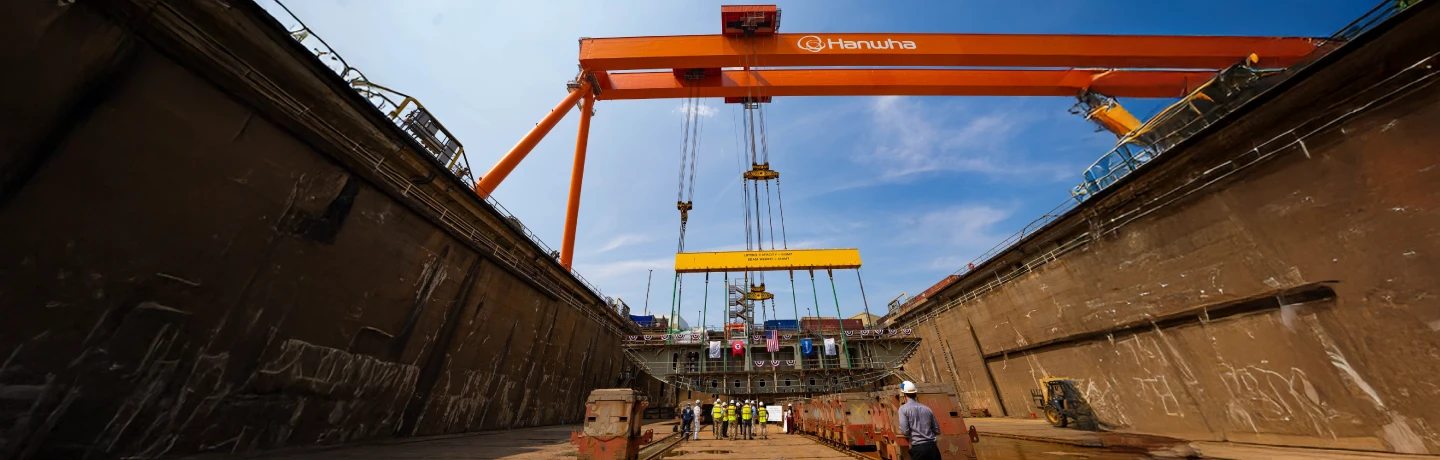
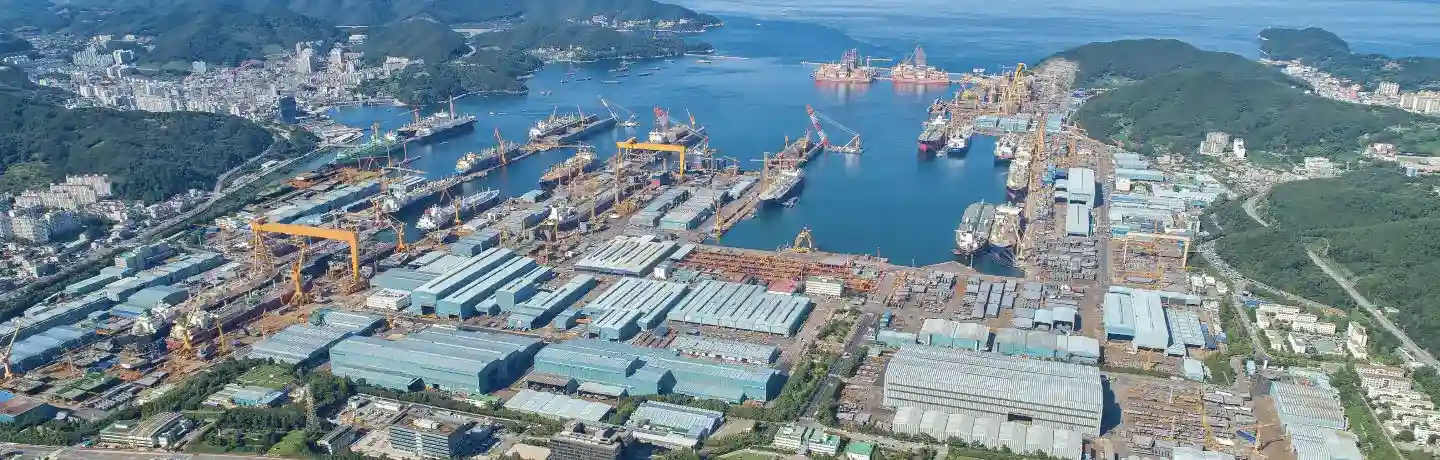
Hanwha acquired Philly Shipyard, one of the most historic shipyards in America, in 2024. The shipyard’s legacy stretches back to 1776 to the former Philadelphia Naval Shipyard, which built warships for nearly every major American conflict from the American Revolution through the Cold War.
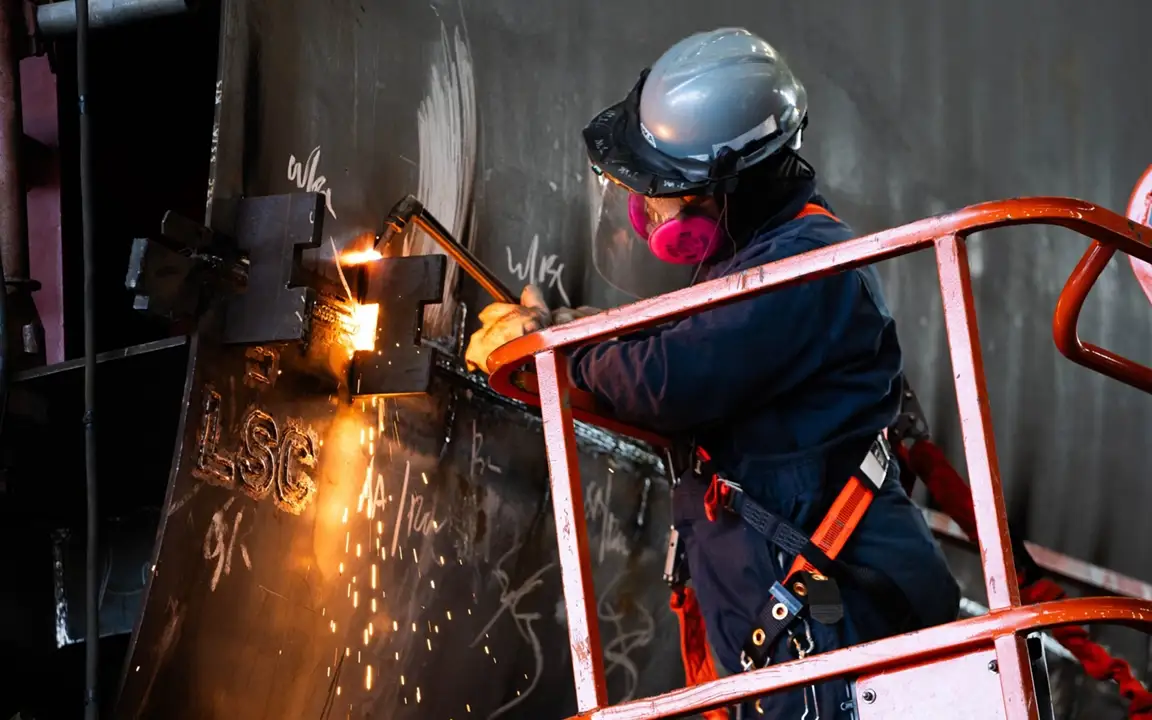
With Hanwha’s investments, Philly Shipyard will continue to play a central role in ensuring America’s national security. Hanwha is transforming Philly Shipyard into a digitally enabled, high-efficiency production hub, with the goal of increasing annual output from less than two vessels to up to 20.
Central to that expansion is the transfer of advanced shipbuilding technology from Hanwha’s shipyard in Korea to Philadelphia. Modern production systems, smart-yard robotics, and digital shipbuilding technologies made Hanwha the first company to deliver 200 LNG carriers, which are among the most complex vessels to build in the world. We want to bring that same technology to America. This will spur the creation of 7,000 new skilled jobs at Hanwha Philly Shipyard.
Hanwha’s investments in Philly Shipyard come alongside rising commercial orders. Hanwha Philly Shipyard has secured orders for 10 medium range (MR) oil and chemical tankers and two LNG carriers, which will keep our new workers busy and realize increasing economies of scale and production excellence at the shipyard.
Beyond commercial shipping, the shipyard is poised to build for the U.S. Navy. Hanwha has a long history of building naval vessels in Korea — including some of the world’s most sophisticated destroyers, frigates, and diesel-electric attack submarines. That expertise laid the groundwork for Hanwha Defense USA and Hanwha Philly Shipyard to secure their first subcontract with the U.S. Navy, under which Hanwha will help with the concept design of the Navy’s next generation logistics ship (NGLS) — a new class of medium-sized vessels designed to refuel, rearm, and resupply combat ships.
Hanwha is a global leader in traditional manned naval vessels, but the next generation of naval warfare will be unmanned. Hanwha is investing in the development of autonomous surface and undersea capabilities, partnering with a series of new software-first entrants to iterate and field unmanned systems as quickly as possible. By combining our advanced manufacturing scale, existing command-and-control technologies, and the software development of our partners, Hanwha is positioning itself at the intersection of traditional maritime production and next-generation autonomy.
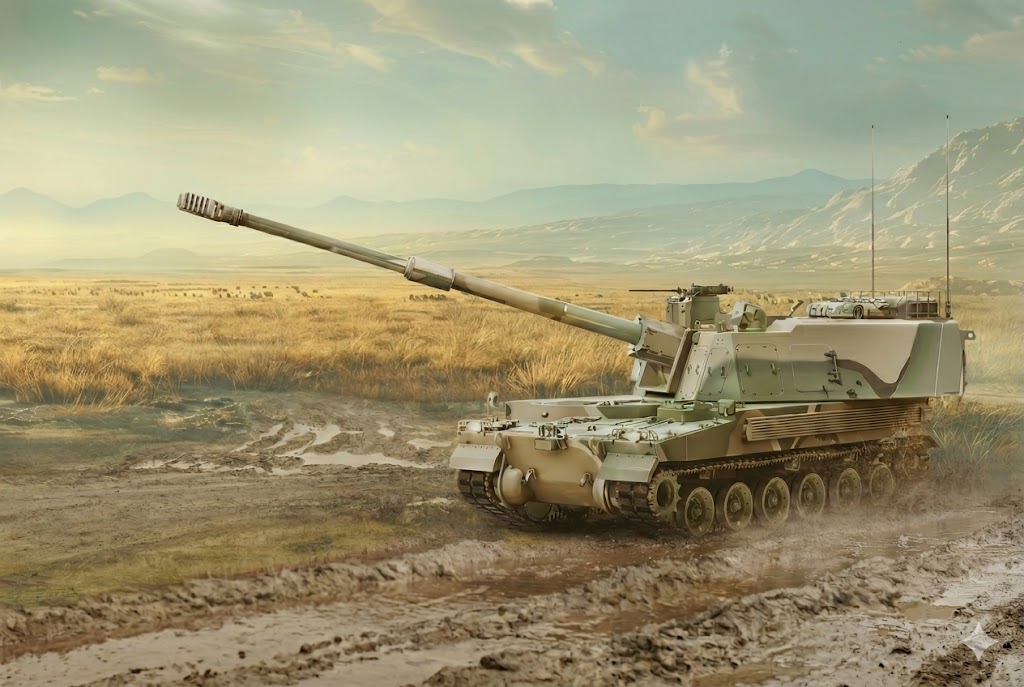
Hanwha Aerospace’s K9 self-propelled howitzer
Land power: munitions, howitzers, and allied production
Hanwha’s investment in American industrial capacity extends beyond the waterline. On land, the focus is munitions and mobile firepower, areas the National Security Strategy specifically identifies as requiring scaled domestic production. The National Security Strategy specifically calls for the ability to “produce the most capable and modern systems and munitions at scale.”
Hanwha is responding directly. In January 2026, the U.S. Army awarded a preliminary lease to Hanwha Defense USA at Pine Bluff Arsenal in Arkansas, paving the way for a $1.3 billion manufacturing facility dedicated to producing critical energetic materials, the essential ingredients for explosives and propellants. The enhanced use lease, pending final negotiations, is designed to address one of the most persistent gaps in the U.S. defense supply chain: the capacity to produce munitions at scale on American soil.
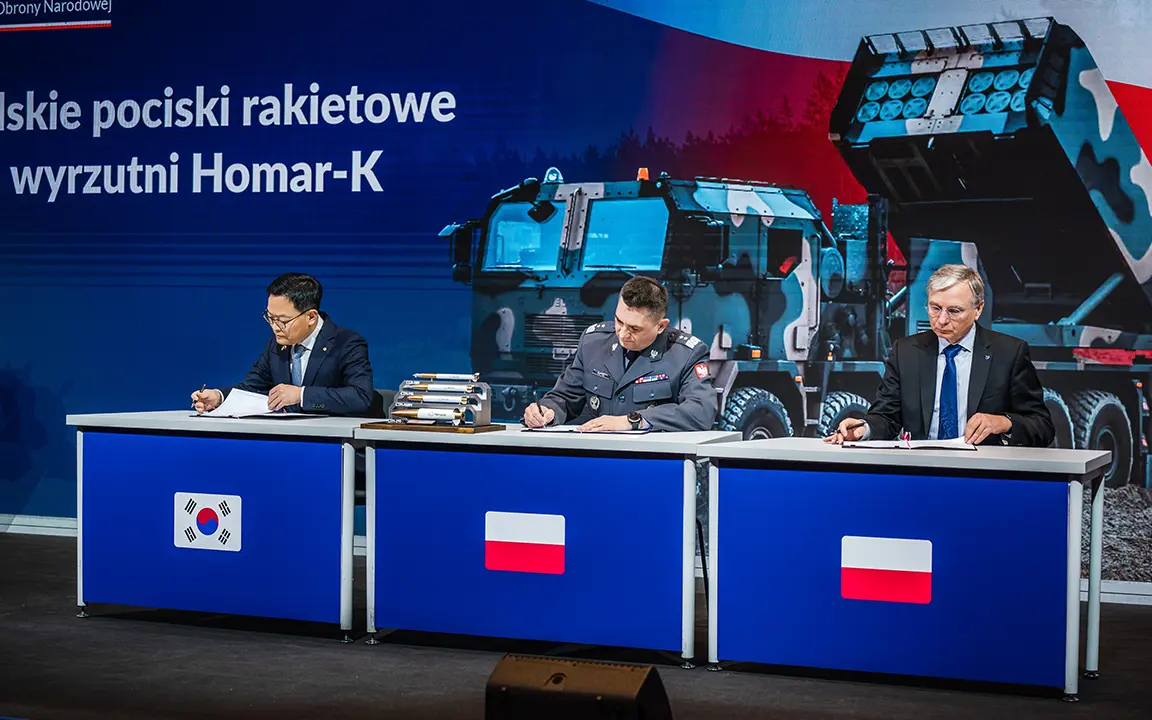
These investments build on a proven allied model. In Europe, Hanwha Aerospace has established K9 self-propelled howitzer programs in Poland and Romania, leveraging a platform already widely adopted across allied forces, with more than 2,500 units in service or production across 10 countries, including six NATO members. Hanwha Aerospace has also secured a $4 billion contract to produce Chunmoo guided missiles in Poland.
The pattern is consistent: Hanwha does not simply deliver platforms, it builds locally sustained defense ecosystems, including co-production facilities and long-term industrial partnerships. In Australia, Hanwha recently completed the first three Australian-made AS9 Huntsman Self-Propelled Howitzers (SPH) made at the Hanwha Armoured Vehicle Centre of Excellence (H-ACE) in Victoria.
In the United States, a cooperative research agreement with the U.S. Army is advancing that same approach, with a collaboration to integrate the U.S. government-designed 58-caliber cannon onto the K9 platform to extend effective range and align with evolving U.S. requirements.
Building what deterrence demands
Through long-term partnerships, technology transfer and lifecycle support, Hanwha helps defense forces modernize, sustain operational readiness, and build durable domestic industrial capacity. From a Philadelphia shipyard to a munitions facility on an Army arsenal — and from autonomous vessel development to cooperative research with U.S. Army engineers — Hanwha is strengthening America’s productive capacity. It is through advanced industrial power that America will deter wars and keep the peace.
Related Content

Get the latest news about Hanwha, right in your inbox.
Fields marked with * are mandatory.
- Non-employee
- Employee