

Why defense resilience increasingly depends on industrial capacity

⦁ Global military spending reached a record $2.9 trillion in 2025, but defense readiness depends on more than equipment. Industrial resilience also requires production capacity, resilient supply chains, skilled workers, and long-term sustainment.
⦁ The U.S. Army selected Hanwha Defense USA to deliver six K9 Mobile Howitzer prototypes for its Mobile Tactical Cannon (MTC) program, with an option for 12 more. The award sits alongside Hanwha’s wider U.S. localization and industrial investment.
⦁ Across Australia, Poland, Romania, Norway, and Sweden, Hanwha is combining its global manufacturing experience with local production, technology transfer, and long-term support to strengthen defense industrial resilience.
Behind every defense system is an industrial ecosystem that largely goes unseen: the engineers who design it, the factories where it is built and tested, the suppliers that provide critical components, and the skilled workforce that keeps it operational. Whether an aircraft, ship, combat vehicle or artillery system, military capability depends not only on the equipment itself, but on the industrial capacity to produce, maintain, and sustain it over time.
That capacity becomes particularly important during prolonged conflicts, when equipment must be maintained and repaired, while depleted inventories need to be replenished over time. This is increasingly relevant as the number of state-based armed conflicts has reached its highest level since World War II, placing greater emphasis on the ability to sustain defense capabilities over time.
Greater investment does not automatically translate into lasting readiness. Global military spending has risen for 11 consecutive years, reaching a record US$2.9 trillion in 2025 amid ongoing conflicts and geopolitical uncertainty. Yet procurement is only part of the equation; investment also needs to extend to the industrial capacity that supports those systems.
That resilience depends on production, diversified supply chains, skilled workers, and sustainment capabilities that allow countries to maintain, replenish, and scale critical systems as needs change. Building more of these capabilities domestically through localization can also reduce reliance on distant or concentrated sources of supply, while strengthening connections between local industry and international partners.
Capacity beyond procurement
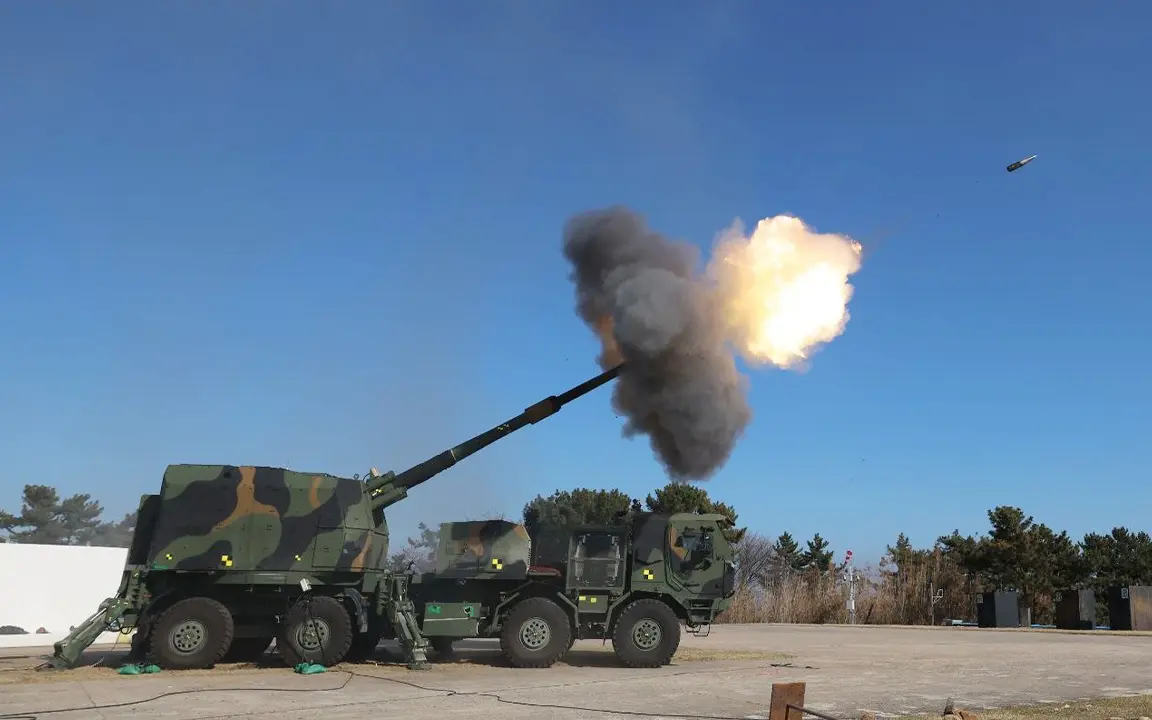
Hanwha’s latest U.S. Army contract illustrates how procurement can sit alongside investment in local industrial capacity. The U.S. Army selected Hanwha Defense USA (HDUSA), a Hanwha Aerospace subsidiary, to deliver six K9 Mobile Howitzer prototypes for its Mobile Tactical Cannon (MTC) program, with an option for 12 more. The program is testing more mobile artillery systems that could replace some of the Army’s existing towed cannons, allowing soldiers to fire and relocate more quickly. If the program proceeds to production, earlier Army acquisition planning outlined a potential buy of up to 500 MTC systems.
More than 2,500 K9 howitzers are already fielded globally. But Hanwha’s U.S. plans extend beyond supplying the howitzers themselves. Hanwha is also investing in production capacity, supply chains, workforce development, and the support needed to sustain that capability in the U.S.
Speaking ahead of the MTC award, Mike Smith, Hanwha Defense USA COO and President of Land Systems, framed artillery capability as extending beyond the howitzer itself.
“Hanwha operates with an industrial warrior ethos that means we execute with certainty across all segments of our portfolio,” Smith says. “This broad spectrum of capability is what enables Hanwha to take a system-of-systems approach to artillery modernization and offer a total artillery solution. Creating precise lethal effects on the battlefield goes well beyond platforms. It’s about production, projectiles, propelling charges, and systems integration. We can offer mature, integrated systems because we have proven capabilities across the entire technology arc.”
That broader commitment is already taking shape in the U.S. In Opelika, Alabama, HDUSA’s integration and test facility will support production ramp-up, workforce development, long-term sustainment, and future upgrades. Hanwha is also investing further in the U.S. defense industrial base through a new advanced manufacturing campus at Pine Bluff Arsenal, Arkansas. Under an Enhanced Use Lease agreement with the army, there will be a total capital investment of US$2.2 billion to support domestic munitions production through this facility, and the investment is expected to create close to 400 jobs over seven years.
The prototype award, integration site, and advanced manufacturing campus connect procurement with the people, production, and infrastructure needed to sustain and scale capability over time.
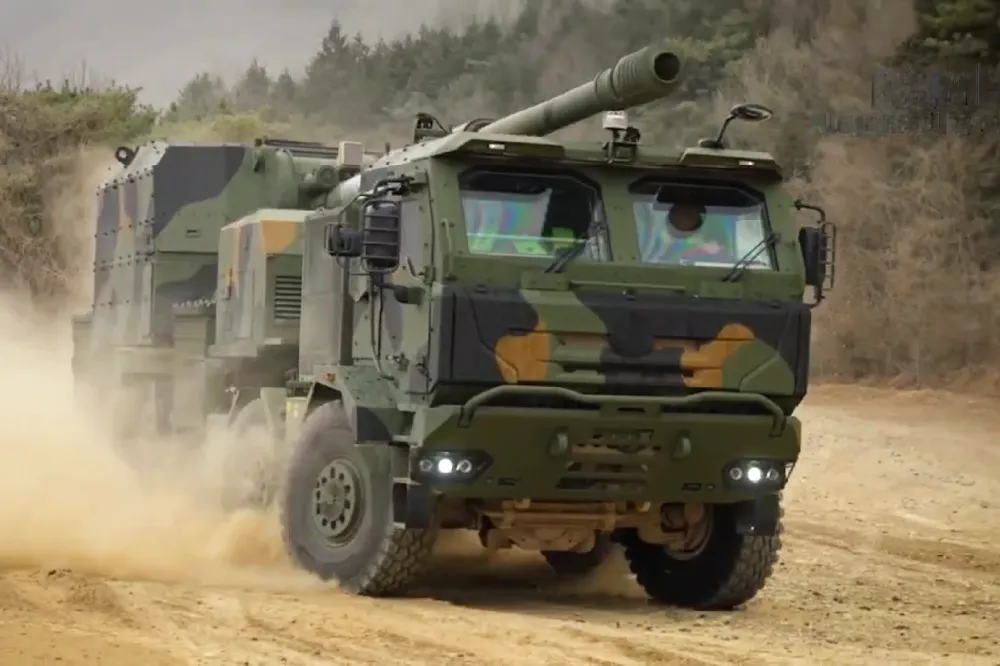
K9 Mobile Howitzer by Hanwha Defense USA
Building industrial partnerships across markets
Hanwha’s U.S. strategy draws on a manufacturing base developed in South Korea and localization experience built across several international markets. Those capabilities are adapted to local needs through manufacturing, technology transfer, workforce development, and sustainment.
That experience is now informing Hanwha’s ambitions in the United States. “Strengthening the U.S. defense industrial base means expanding the capacity to build and sustain critical capabilities here at home,” says Michael Coulter, CEO of Hanwha Defense USA. “Our goal is to bring that same long-term approach to the U.S. — whether in shipbuilding or land systems — by investing in local production, skilled workers, efficient technology, and the capacity to sustain what we build.”
Across other markets, that approach takes different forms. In Australia, the Hanwha Armoured Vehicle Centre of Excellence (H-ACE) in Geelong provides a particularly tangible example. Hanwha Aerospace’s first overseas production base includes production and assembly facilities, a driving test site, and a shooting range, while supporting participation by Australian suppliers. In Poland and Romania, partnerships are expanding to include technology transfer, local suppliers and longer-term manufacturing capacity. Hanwha’s Polish K9 agreement includes technology transfer and local production of maintenance parts, while most vehicles under its Romanian K9 contract are planned to be manufactured in Romania with local supplier involvement.
The form of localization varies by market, reflecting existing industrial capabilities and customer requirements. In Norway, Hanwha’s K9 relationship includes cooperation around operations, maintenance, and training. In Sweden, its role includes supplying modular propellant charges for the country’s artillery forces.
The K9 provides a common thread across many of these relationships, with units delivered to 10 countries across four continents, including six NATO members. The K9 User Club gives operators a forum to exchange lessons on operations, maintenance, and training.
Building capacity for the long term
As defense requirements evolve, the ability to maintain and expand industrial capacity will remain an important part of long-term readiness. Procurement decisions increasingly need to account not only for the systems required today but also for how they will be supported over time.
Hanwha Defense USA Executive Director of Fire Capture Programs Todd Mueller framed the MTC award as part of that industrial commitment. “We are not simply delivering a system — we are building an American manufacturing enterprise, transferring technology and creating a lasting foundation for broad industrial collaboration,” he says. “Hanwha is invested in America for the long term.”
This content was produced in partnership with Forbes BrandVoice.
Related Content


Get the latest news about Hanwha, right in your inbox.
Fields marked with * are mandatory.
- Non-employee
- Employee