

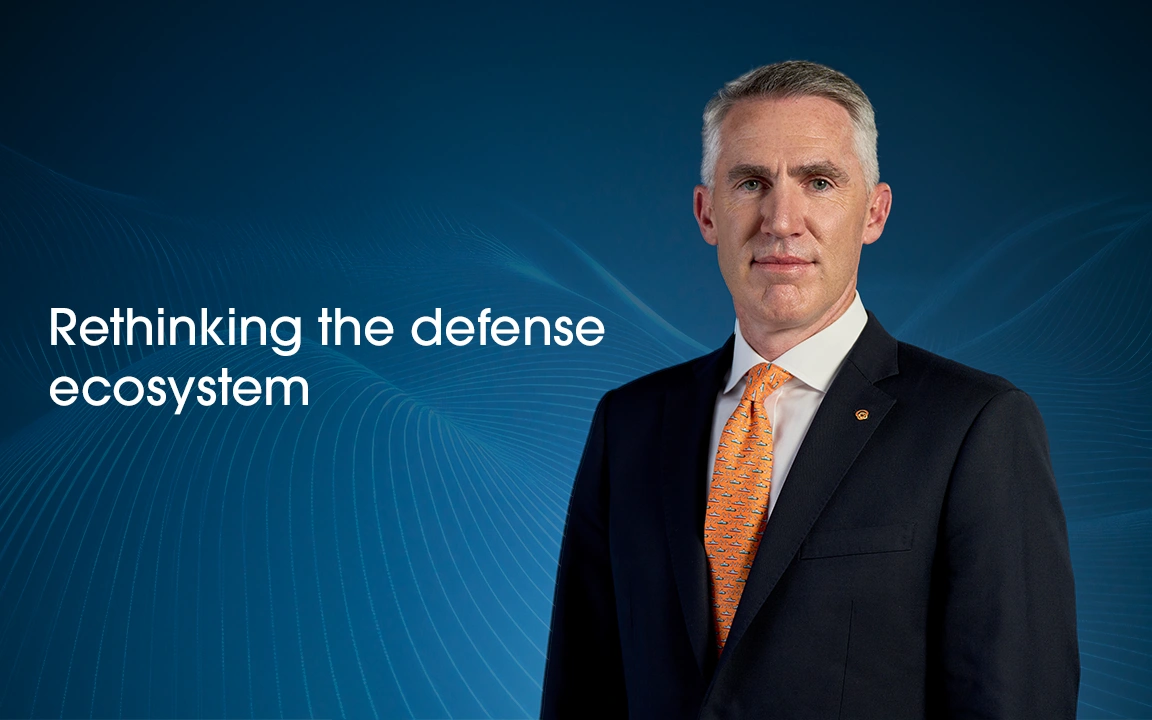
Envisioning the future with Hanwha Group Global CSO Alex Wong

• Global military spending hit a record $2.9 trillion in 2025, but allied governments now measure deterrence by industrial throughput rather than platform inventory.
• Hanwha combines the manufacturing scale of a traditional defense prime with rapid innovation, born from battlefield lessons and experience of operating in Korea’s demanding security environment.
• Through localized production in Europe and embedded industrial investment in the United States, Hanwha is building toward its long-term role as a multinational defense partner.
In 2025, global military spending reached a record $2.9 trillion, the 11th consecutive annual rise, with European expenditure up 14% in a single year. Beneath that headline figure, the nature of defense demand is changing. Allied governments are no longer focused only on the platforms they field, but on whether they can produce, sustain, and regenerate them at scale.
The shift is driven by an increasingly multipolar geopolitical landscape that has blurred the line between economic and security policy. Sustained conflicts in Ukraine and the Middle East have made productive capacity, not platform inventory, the new measure of deterrence, with stockpiles drawn down faster than peacetime supply chains can replenish them.
Beyond advanced platforms, defense partners are now expected to help rebuild domestic manufacturing capacity, transfer technology, develop workforces, and sustain capability over time. The result is a defense industry increasingly expected to support broader industrial resilience alongside engineering and manufacturing.
Why has industrial scale become a measure of deterrence?
Prolonged conflicts are exposing how quickly modern warfare can exhaust munitions inventories. Deterrence today depends on industrial throughput as much as platform quality, and on the resilience of the upstream supply chains that support it.
Allied governments have responded with industrial policy. The 2025 U.S. National Security Strategy calls for the ability to “produce the most capable and modern systems and munitions at scale,” while Europe’s Readiness Roadmap 2030 is built around comparable goals, with milestones for joint procurement, defense industrial capacity, supply-chain resilience, and workforce development.
“It’s not just about who has the weapons, it is about who has productive capacity, who has economic strength,” says Hanwha Group Global CSO Alex Wong.
What makes Hanwha's position distinctive?
Most defense companies sit at one end of a spectrum. Traditional primes often have industrial scale but are slower to innovate, while defense startups are software-first and agile but lack manufacturing capacity.
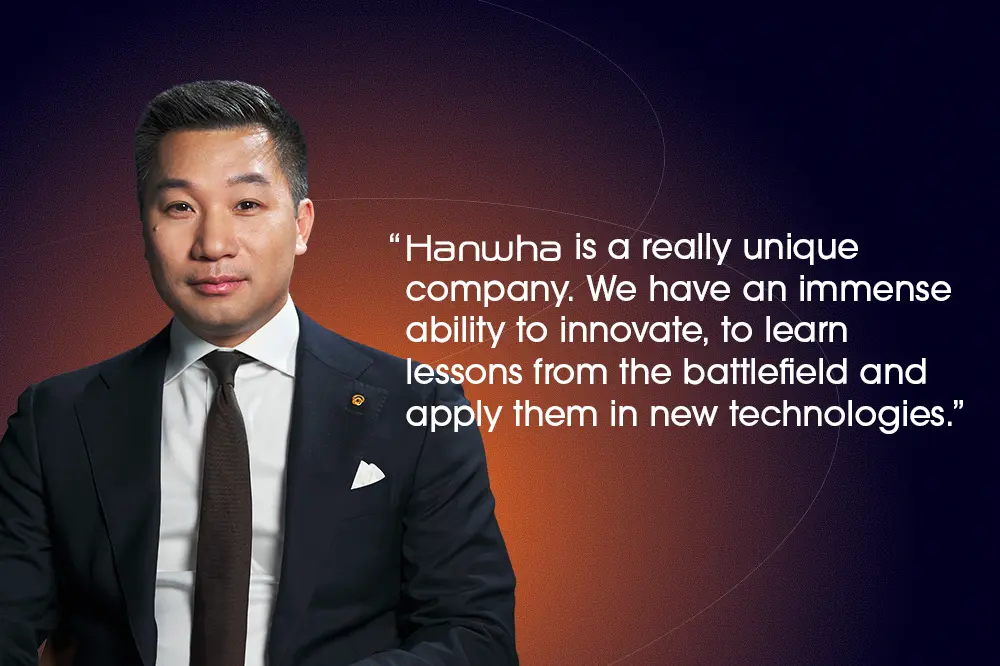
“Hanwha is a really unique company,” Wong says. “We have an immense ability to innovate, to learn lessons from the battlefield and apply them in new technologies. But we have the industrial scale to produce weapons en masse, to produce the hardware that we can marry up to the software.”
Hanwha’s industrial base spans land systems, munitions, guided missiles, and naval shipbuilding, supporting production at scale, while its capabilities across AI, autonomy, and digital manufacturing keep pace with how modern systems evolve. The company was founded in the context of conflict and has supplied Korea’s national defense on a peninsula that remains an active deterrence environment, an experience that shapes how it approaches partnerships abroad.
How is Hanwha taking the model into allied markets?
In Europe, Hanwha’s approach centers on localization, technology transfer, coproduction, and long-term industrial cooperation, designed to complement national defense modernization efforts rather than compete with them. K9 self-propelled howitzers are now in service or under contract in Poland, Romania, and Norway; a Hanwha and WB Group joint venture is establishing local production of Chunmoo guided rockets in Poland; and the company has secured a $110 million framework with Sweden’s Defence Materiel Administration, which covers Modular Charge Systems for 155 mm artillery.
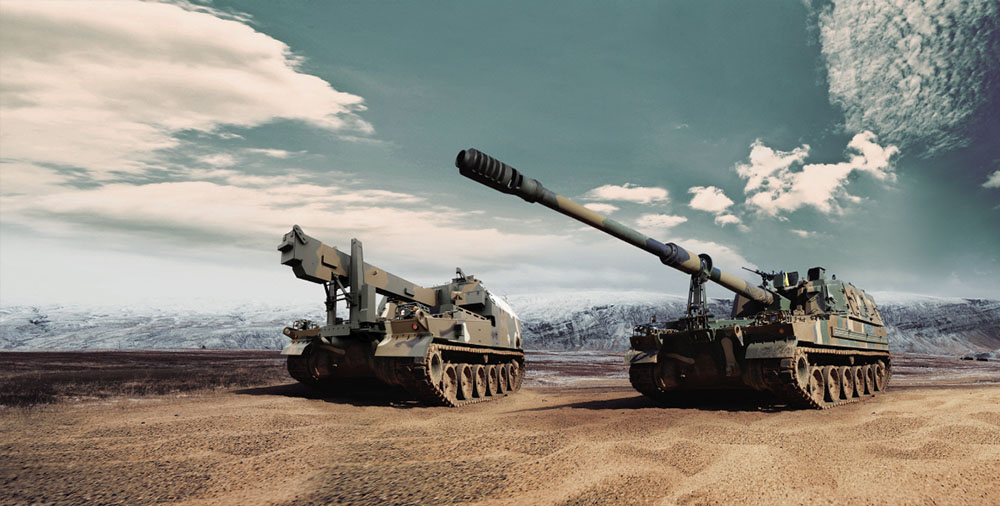
Hanwha Aerospace’s K9 self-propelled howitzer (right) and K10 ammunition resupply vehicle (left)
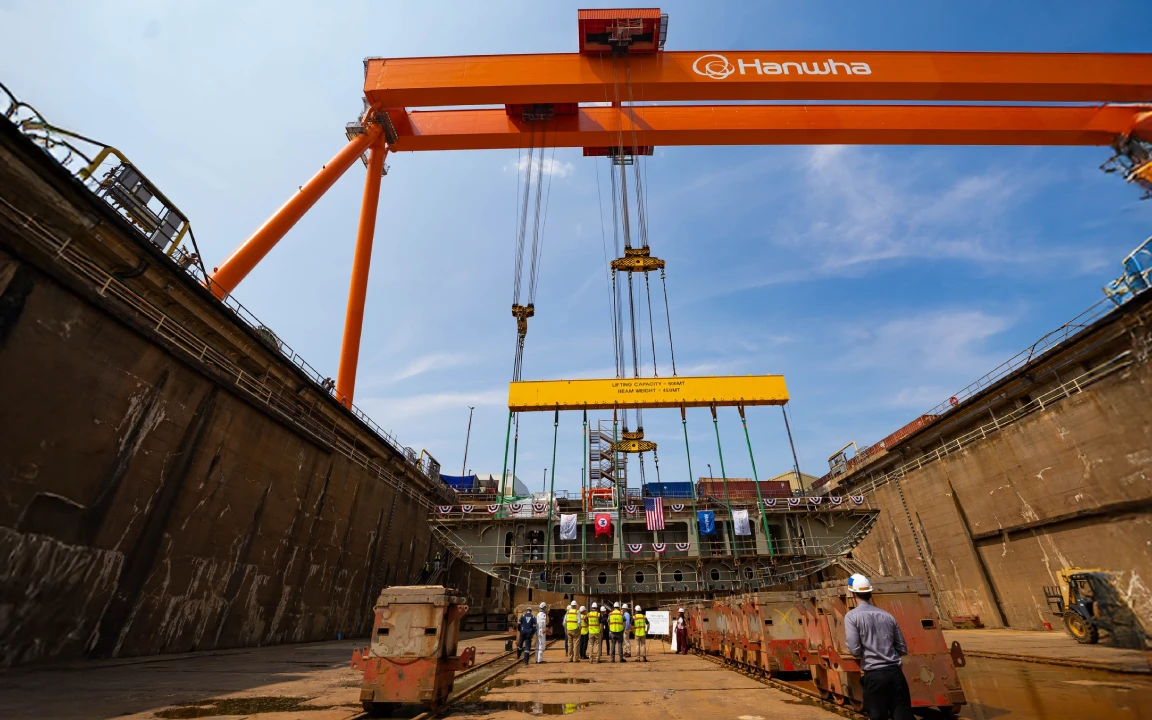
In the United States, Hanwha’s 2024 acquisition of Philly Shipyard reflects a commitment to revitalizing American maritime infrastructure, with plans to increase shipbuilding through infrastructure modernization, smart-yard systems, and a growing skilled workforce. A planned $1.3 billion munitions facility at Pine Bluff Arsenal, supported by a preliminary U.S. Army lease awarded in January 2026, is expected to produce critical energetic materials to support the broader domestic munitions supply chain.
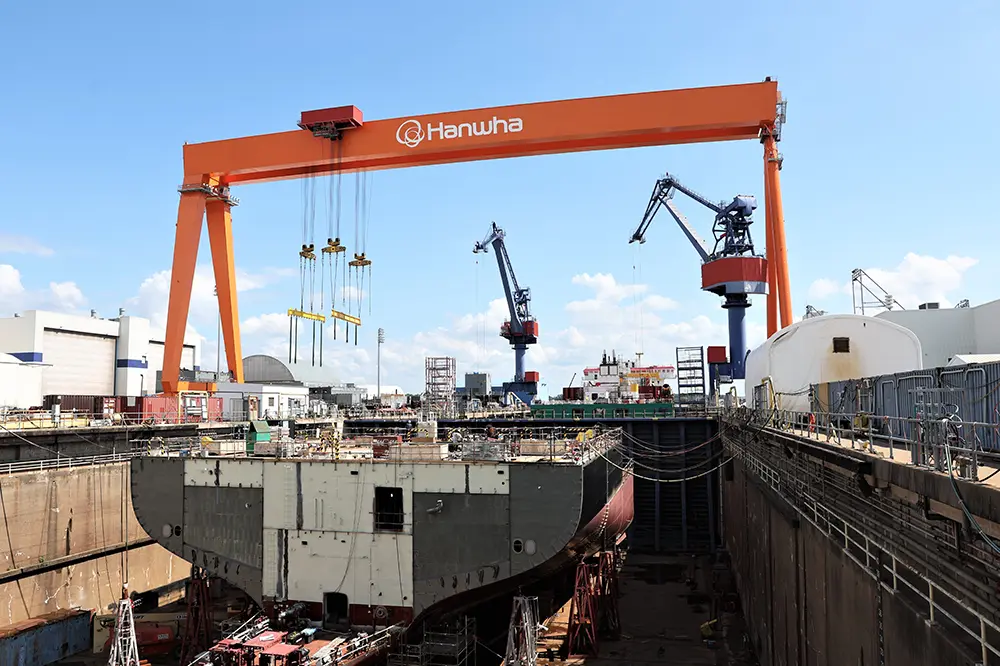
Hanwha Philly Shipyard, which was acquired by Hanwha Systems and Hanwha Ocean in 2024
What will durable allied security require?
Industrial readiness is becoming inseparable from military readiness. Allied security increasingly depends on rebuilt industrial bases, integrated multi-domain capabilities, and sustained partnerships between trusted democratic nations that can mobilize production at speed.
For Hanwha, this is the basis of a long-term ambition: to operate in allied markets the way it does in Korea, as a defense prime contributing across land, sea, and emerging autonomous domains. Success in those markets will be measured by modernized facilities, skilled jobs, and stronger supply chains in the countries where the company invests.
“Hanwha brings to the table something that our allies in the West need. It is that rate of innovation, it is that productive capacity, it is that industrial scale, but it’s also the trust built because Korea is an ally, is a democracy,” Wong explains. “Having that heritage combined with our capabilities, we will become a very significant and essential player in the defense of those nations.”
Related Content


Get the latest news about Hanwha, right in your inbox.
Fields marked with * are mandatory.
- Non-employee
- Employee