

How integrated maritime power is shaping modern naval capability
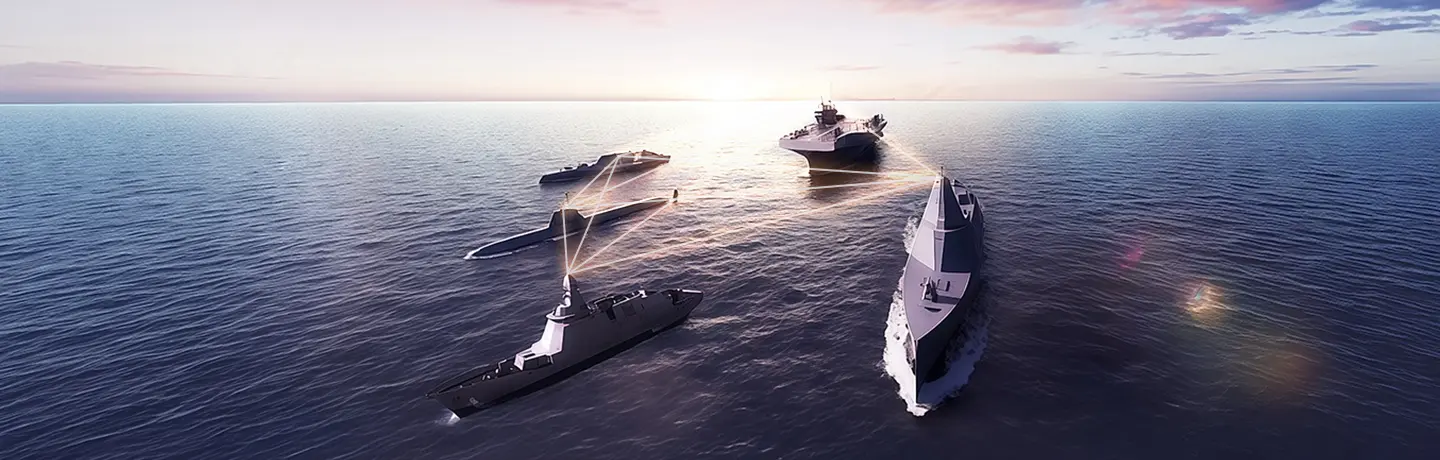
• Maritime power is increasingly defined by integration, with navies prioritizing systems that connect platforms, sensors, combat systems, propulsion and sustainment across the full lifecycle.
• Hanwha’s approach brings surface vessels, submarines, unmanned systems, sensors, combat management and propulsion into a unified maritime architecture designed for endurance, adaptability and long-term operability.
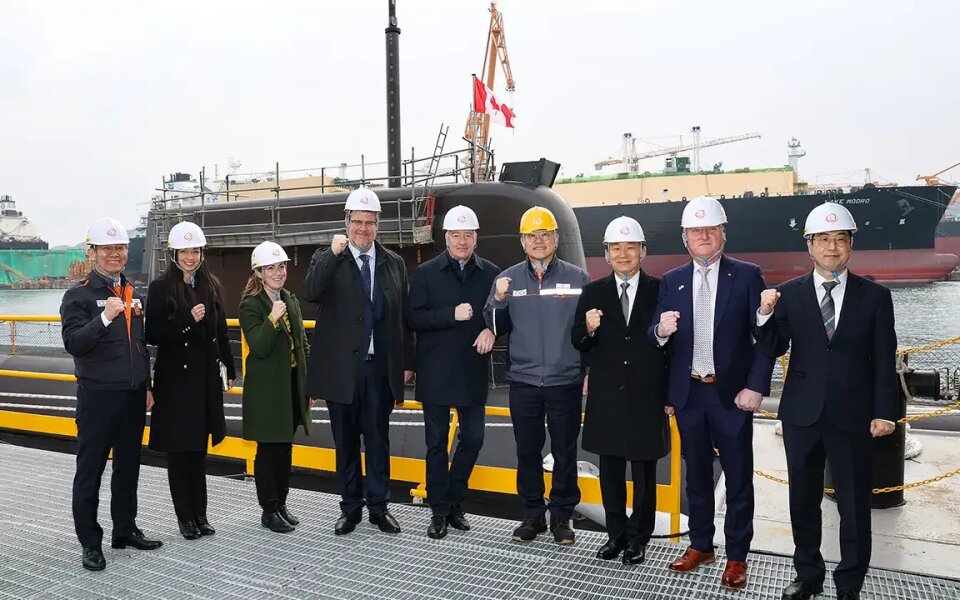
• This integrated, end-to-end model is being applied globally through industrial partnerships, supporting modern naval capability development, sustainment and in-country collaboration.
The sea has become a central arena for national security and economic resilience. Covering more than 70% of the Earth’s surface, the oceans serve as the primary passage through which nations connect to the world — carrying the energy, materials, and resources they depend on. As such, safeguarding these routes and the naval infrastructure that underpins them has become a strategic priority.
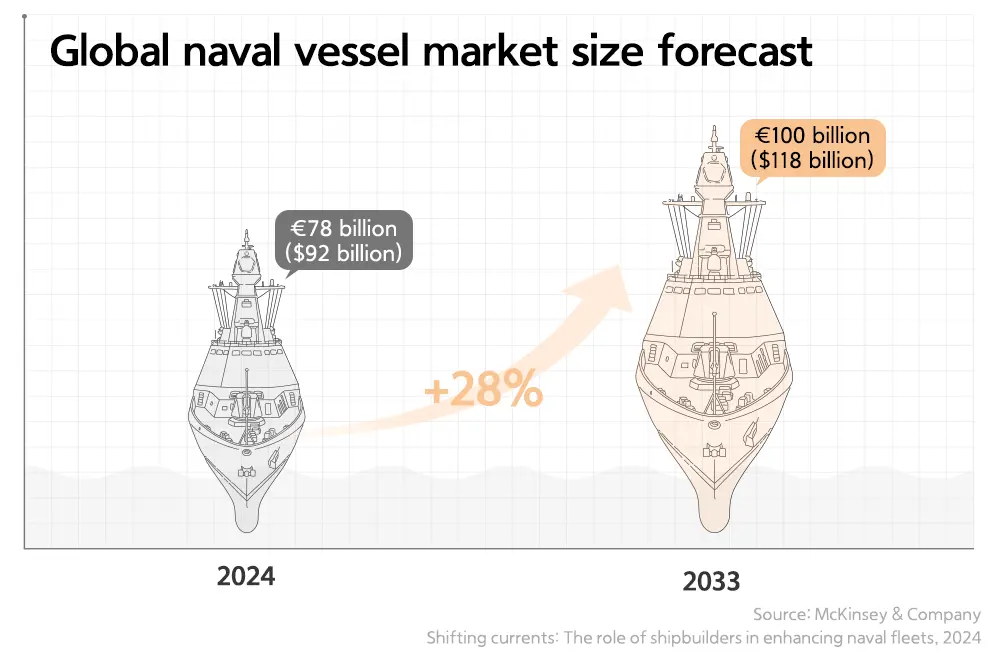
Countries around the world are moving to strengthen their maritime power by modernizing aging vessels and introducing next-generation technologies, a shift reflected in the growth of the global naval vessel market. According to McKinsey & Company, the market is projected to exceed €100 billion ($118 billion) by 2033, with demand for surface vessels, submarines, and naval maintenance, repair, and overhaul (MRO) projects adding momentum.
This projected growth reflects mounting operational and security pressures that governments are increasingly addressing through strategic investment. In the European Union, the Maritime Security Strategy (EUMSS) emphasizes the need to treat maritime capability as an integrated system, linking naval forces, surveillance, information sharing, and infrastructure protection rather than viewing them as standalone assets.
Taken together, these shifts underscore how maritime power is increasingly viewed not simply as a measure of fleet size, but as a strategic asset defined by integration, endurance, and long-term operational resilience.
An integrated approach to maritime platforms
Naval vessels are the culmination of a complex industry that integrates the precision of shipbuilding, advanced weapons systems, and now, AI and autonomous technologies. Hanwha’s comprehensive portfolio of maritime solutions spans the full spectrum of naval capability. Built around an integrated systems model, it treats surface vessels, submarines, and unmanned platforms as interconnected elements within a single maritime architecture.
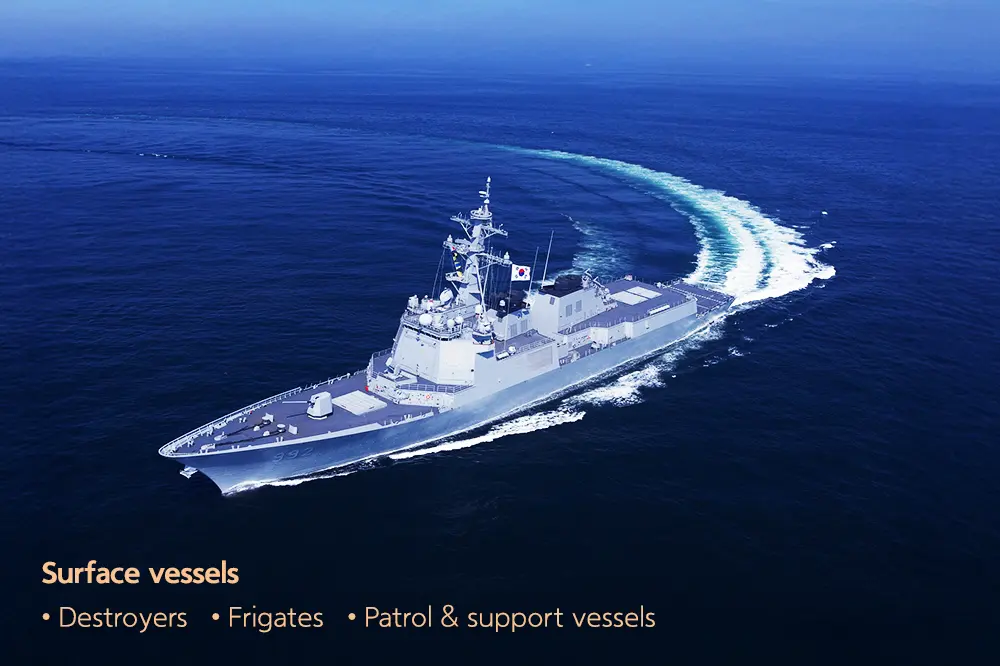
For surface platforms, Hanwha has designed and constructed vessels across combat and support roles, with a focus on survivability, operational efficiency, and long service life. Integration at the design stage allows these platforms to remain adaptable as mission requirements evolve.
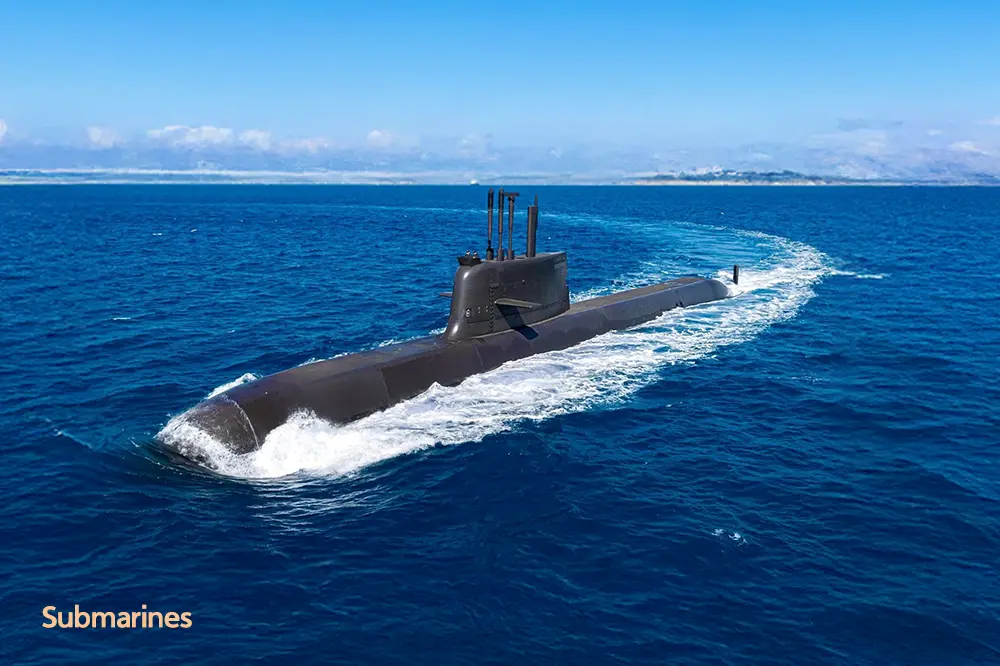
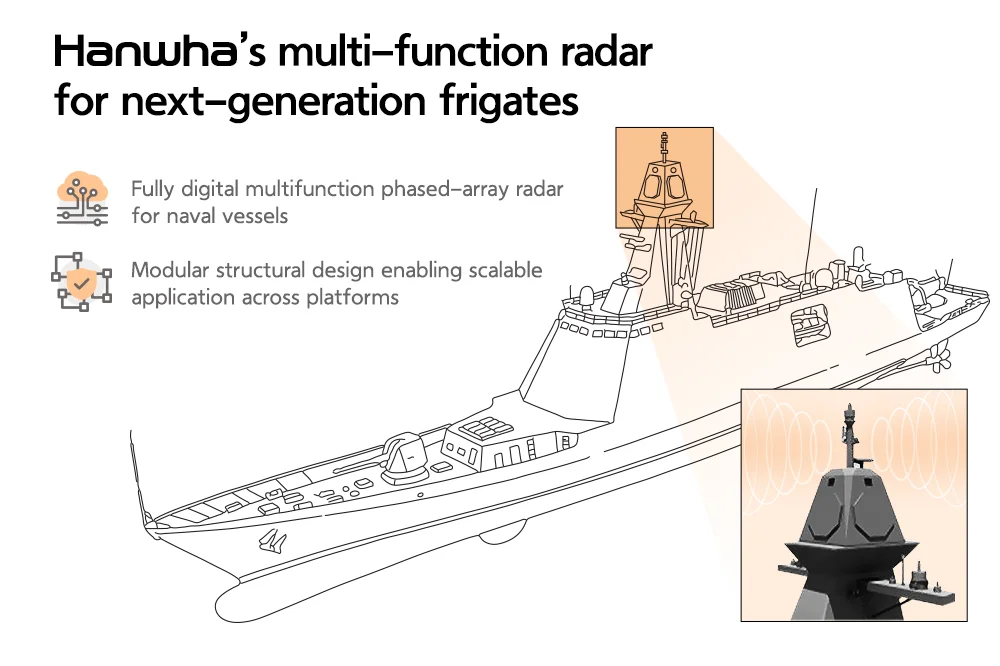
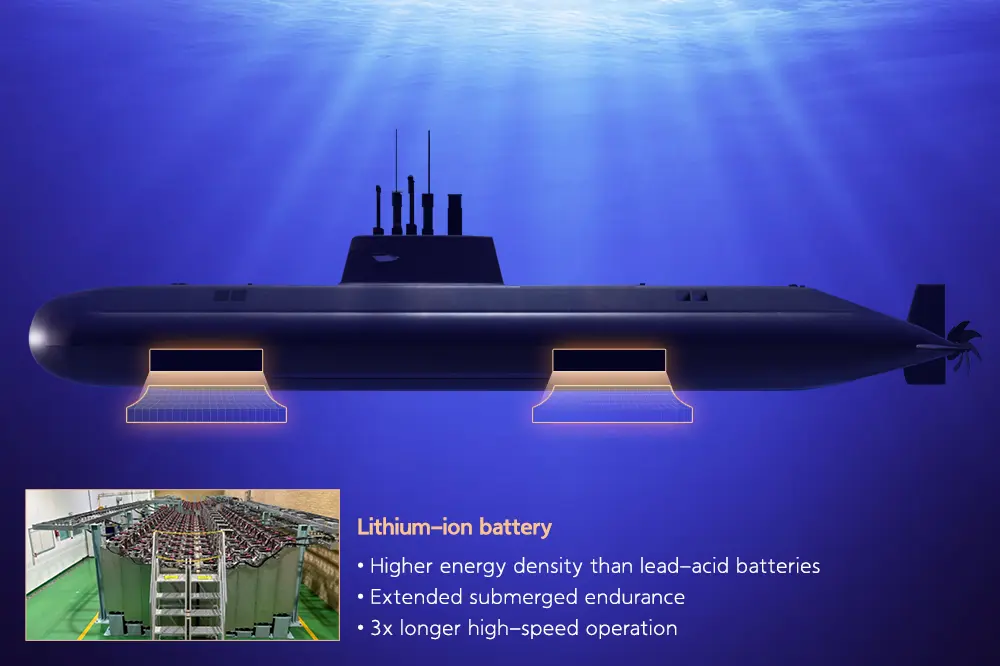
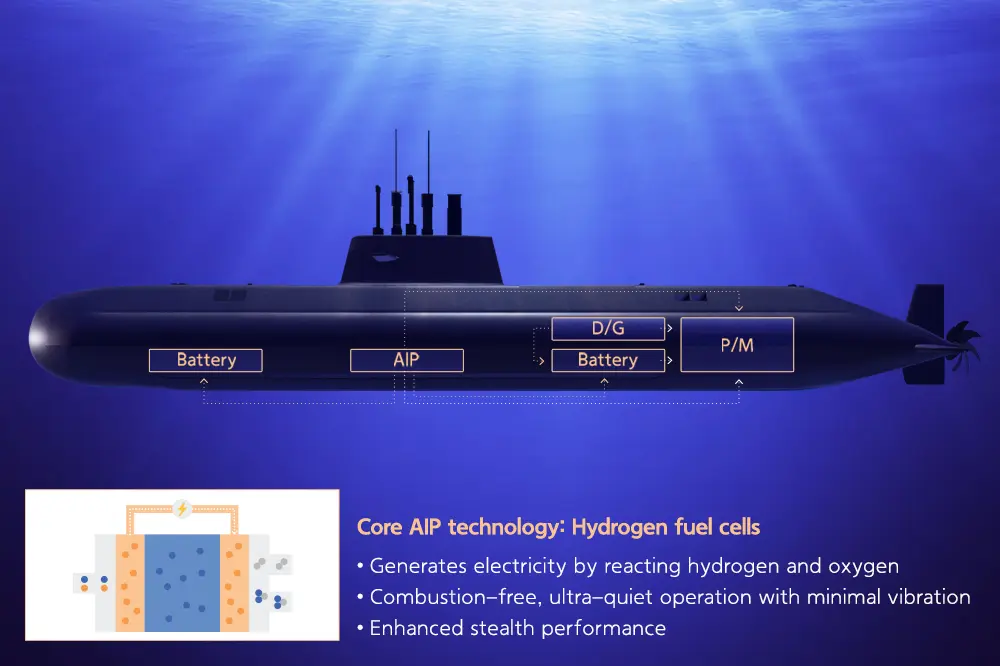
In the submarine domain, endurance and discretion are increasingly decisive. Hanwha pairs fuel-cell air-independent propulsion with lithium-ion energy storage, letting conventional submarines hold their depth far longer without surfacing. The result is a quieter boat with a longer reach. Noise and vibration drop and operational range grows. Onboard, a unified machinery control system ties propulsion and energy together, with condition-based maintenance built in to catch problems before they become failures. The thinking extends above the waterline too: fully digital phased-array radar and AI-driven combat management give surface vessels layered detection, fast data fusion and the ability to coordinate across domains in real time.
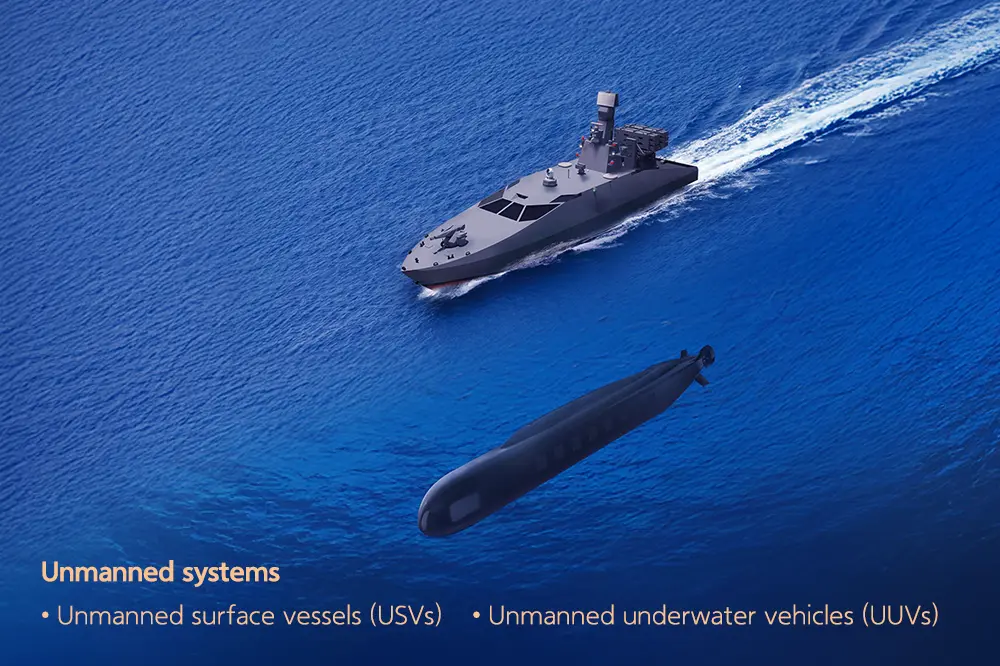
Unmanned platforms are also becoming an increasingly important part of modern maritime operations. Hanwha is developing unmanned surface and underwater systems designed to operate autonomously or alongside crewed vessels, extending surveillance reach and enhancing operational flexibility.
Designed to integrate seamlessly with existing naval architectures through shared sensors, control systems, and combat frameworks, these platforms can operate independently or as force multipliers within a coordinated fleet. Rather than treating unmanned vessels as standalone assets, Hanwha’s approach embeds them within existing command and control structures — supporting coordinated, mixed human-autonomous operations without fragmenting fleet command architectures.
Hanwha’s full marine platform lineup
Seeing, deciding, and responding
In modern naval operations, fast, accurate threat detection is decisive. Sensors and radar provide situational awareness, while combat systems fuse data and support rapid response.
Hanwha has developed capabilities across key naval sensor technologies, including multi-function radar (MFR) and sonar systems. MFR consolidates detection, tracking, identification, and surveillance into a single system, supporting layered defense and complex operational scenarios. Sonar systems address underwater threats, contributing to comprehensive maritime awareness below the surface.
At the center of this ecosystem is the combat management system (CMS). By rapidly analyzing sensor data and linking it to weapons and countermeasures, the CMS shortens the time between detection and response. Reliability and interoperability are critical, particularly in high-tempo environments where decision speed shapes outcomes. The integration of artificial intelligence into combat systems is expected to further enhance situational awareness and decision support.
Endurance, propulsion, and control
Building on more than 40 years of accumulated aircraft engine expertise, Hanwha Aerospace is advancing its capabilities in marine propulsion. Alongside onboard energy systems, reliable propulsion underpins maritime operations. Without it, advanced sensors and weapons cannot deliver operational value. Hanwha approaches propulsion as an enabler of endurance and stealth rather than a standalone mechanical function.
For surface vessels, propulsion technologies focus on efficiency and long-term reliability. For submarines, the priority is sustained submerged operation with minimal acoustic signature. Air-independent propulsion (AIP), including fuel-cell–based systems, combined with advanced lithium-ion energy storage systems (ESS), enables extended underwater missions without reliance on external air — significantly increasing submerged endurance while minimizing noise and vibration.
These propulsion systems are integrated with platform design through unified machinery control and condition-based maintenance systems. Linking them with power management and digital control systems enables operators to gain greater visibility into system health, improve availability, and reduce unplanned downtime — strengthening fleet readiness over long service lifecycles.
The evolution of naval propulsion
Integration as a strategic advantage
True maritime power lies in integration. Sensors detect threats, combat systems assess and respond, and propulsion systems provide endurance and mobility. When these elements are designed and operated as a single system, they create operational coherence.
Hanwha’s strength lies in delivering this integration across the full lifecycle of naval assets, from design and construction to operation, maintenance, and modernization. As navies face increasingly complex security environments and longer fleet renewal cycles, this end-to-end approach is becoming central to how maritime capability is defined and sustained.
In an era where naval effectiveness depends on endurance and adaptability, Hanwha’s systems-based approach reflects the evolving requirements of modern maritime power.
Related Content
Get the latest news about Hanwha, right in your inbox.
Fields marked with * are mandatory.
- Non-employee
- Employee