

How Hanwha Q ENERGY turns aging sites into tomorrow’s power sources
As energy demand continues to rise, the pressure to deliver dependable power within tight land and permitting constraints is prompting a rethink of where and how new energy capacity can be built. Land suitable for large energy projects is often limited, yet across industrial regions, there are sites that once powered industry and now sit quiet: water-filled gravel pits, disused quarries, and first-generation wind farms nearing the end of their economic lifespans.
These locations can offer opportunities for new capacity. Floating solar arrays are turning industrial ponds into productive generation hubs, while modern turbines are breathing life into high yield wind sites first developed two decades ago. The shift reflects a wider recognition that strengthening energy resilience may depend not just on new builds, but on smarter use of assets already in place.
One company providing an example of how this can be done is Hanwha Q ENERGY, a holistic energy solutions provider delivering renewable power projects across Europe. With recent projects spanning from Europe’s largest floating solar installation to France’s leading repowering pipeline, Q ENERGY is demonstrating how land modernization and repowering can deliver meaningful capacity gains — without expanding physical footprints.
How does floating solar add capacity without land?
Floating solar can offer a practical way to add capacity in places where from-scratch development is difficult. Disused industrial basins offer large, undisturbed surfaces that can host new generation capacity while leaving surrounding areas available for other uses. Driven by rising demand for land-efficient infrastructure, the floating solar market is gaining momentum — it is projected to reach $84.90 million by 2032, up from $55.11 million in 2024.
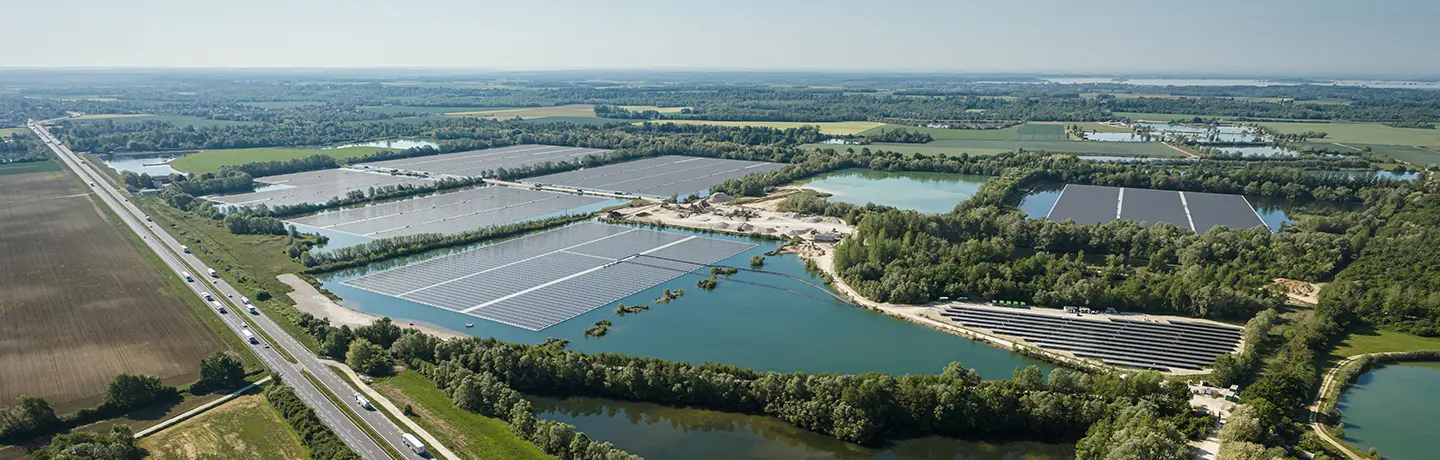
In France, the Les Îlots Blandin project — developed and built by Hanwha Q ENERGY — shows the scale of what’s possible with floating solar farms. The site spans five former gravel pits that had sat idle for years. Today, more than 135,000 solar modules sit across the water, making it the largest installation of its kind in Europe with a total capacity of 74.3 MWp. By working on adaptable industrial land, the project avoided many of the land-use conflicts that often slow large developments and supported a smoother permitting process.
Crucially, projects like these demonstrate that with the right engineering, environmental review, and coordinated logistics, these installations can be delivered reliably and replicated in other regions that need to expand generation capacity but face land or regulatory constraints.
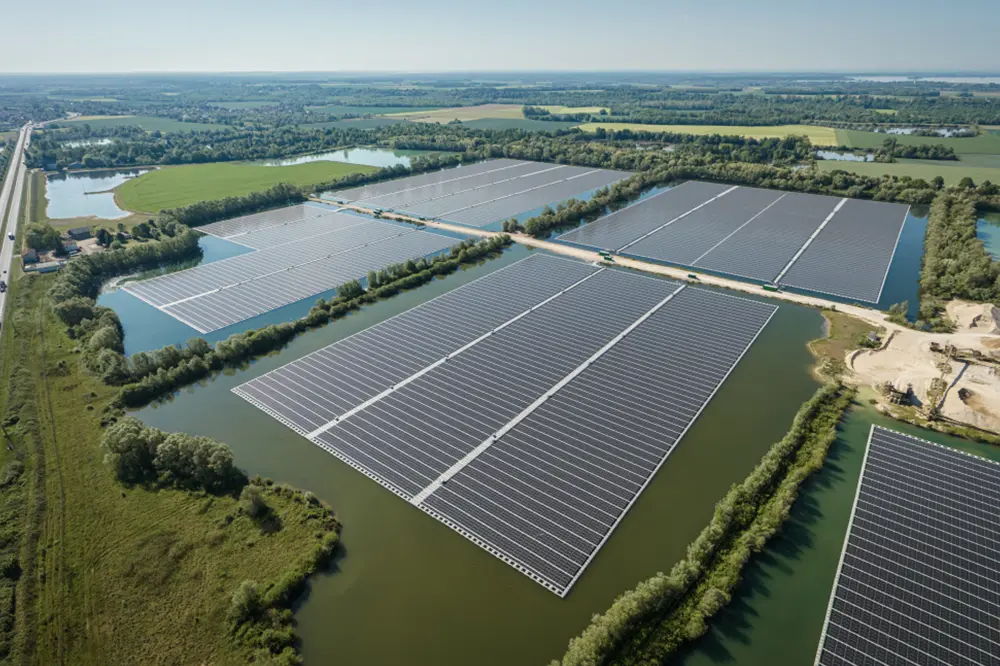
Europe's largest floating solar plant, Les Îlots Blandin (Source: Hanwha Q ENERGY)
How does repowering bring wind sites back to life?
While water-based projects create one pathway for adding capacity, another opportunity lies in wind repowering. Across Europe, many of the wind farms built during the sector’s early growth are reaching their operational limits. These sites were often placed in high-yield locations and still hold significant generation potential, even as their first-generation wind turbines age out. Repowering gives these strategic assets a second life by replacing older models with modernized turbines that produce more energy, operate more efficiently, and do so without requiring any further land permitting.
Hanwha's Q ENERGY is one of France’s leading companies within this space, submitting 10% of all repowering authorizations in the country. With more than 1 GW in development across 33 projects and a recent agreement to cover a 300 MW portfolio with Nadara — one of Europe’s largest renewable energy independent power producers — the company is helping accelerate significant upgrades across multiple high-value sites.
At a time when existing infrastructure is under increasing strain, repowering can help high-potential sites continue contributing to supply — a valuable approach that can be implemented worldwide.
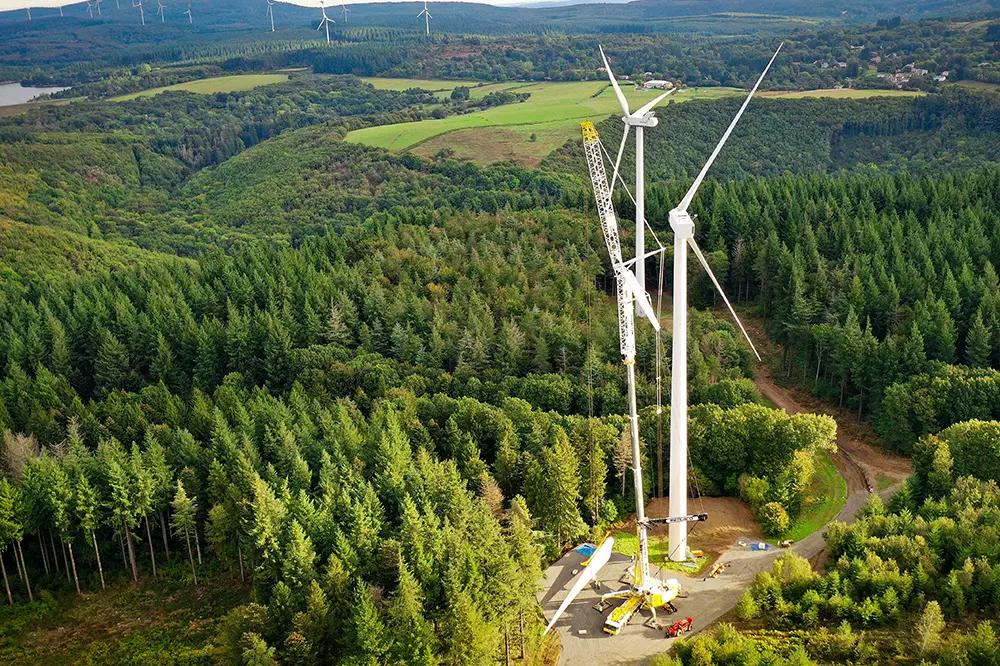
Repowering of the existing Cuxac wind farm in France (Source: Hanwha Q ENERGY)
Can upgrading sites strengthen energy systems around the world?
Though Hanwha Q ENERGY’s recent projects are rooted in Europe, the conditions driving them are felt across in energy markets worldwide. Many countries are working with limited land availability, rising electricity demand, and fleets of aging grids and energy assets that no longer meet today’s performance needs.
In these environments, upgrading existing sites can be one of the most practical ways to add dependable capacity. Whether through modernizing midlife wind farms, reusing industrial basins for solar, or adapting underused land for new technologies, targeted reinvestment can raise output without the delays or land-use conflicts associated with starting from scratch.
As part of Hanwha’s wider energy portfolio, which spans generation, storage, and integrated power services, Q ENERGY’s work in Europe offers a replicable blueprint for how strategic upgrades to existing sites can help regions reinforce supply, strengthen energy resilience, and meet rising power needs.
Related Content
Get the latest news about Hanwha, right in your inbox.
Fields marked with * are mandatory.
- Non-employee
- Employee