

Tech Tutor: How onboard carbon capture and storage can help cut shipping emissions

The shipping industry has long relied on fossil fuels for propulsion, embedding carbon-intensive practices across the maritime sector. Its dependence on high-energy fuels, the vast distances vessels must travel, and the fact that ships often remain in service for decades have made it one of the hardest industries to decarbonize.
That long-standing model, however, is becoming increasingly difficult to sustain. Tightening climate targets and evolving regulations — led by the International Maritime Organization’s goal of net zero emissions by 2050 — are driving a fundamental reevaluation of how vessels are fueled, built, and operated.
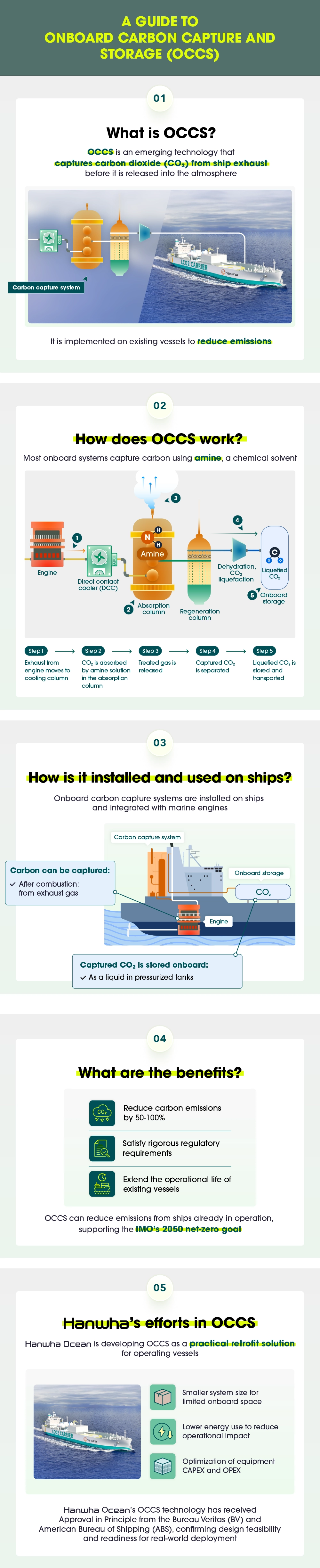
But building and deploying new vessels powered by alternative fuels takes time. As a result, many operators are prioritizing emissions-reduction measures that can be deployed on existing vessels and propulsion systems to meet near-term requirements. Against this backdrop, onboard carbon capture and storage (OCCS) is emerging as a retrofit solution that can reduce emissions from ships already in operation, supporting the industry’s transition as it works toward lower-carbon fleets.
Below is a closer look at how OCCS works — and the interim role it can play in reducing emissions as clean shipping technologies continue to scale.
Related Content



Get the latest news about Hanwha, right in your inbox.
Fields marked with * are mandatory.
- Non-employee
- Employee