

What Gastech 2026 signals about the future of energy
⦁ The IEA expects electricity demand to grow 3.6% in 2026 and 3.8% in 2027, and new supply and grid capacity are not keeping up. Balancing reliability, affordability, and emissions is getting harder, and no one fuel or technology does everything.
⦁ The feature takes each part in turn: gas and the ships that carry it, hydrogen and ammonia for what is hard to electrify, battery-hybrid propulsion and shore power at the quayside, and AI-enabled energy management on the grid. What ties them together is the infrastructure linking supply, transport, storage, and use.
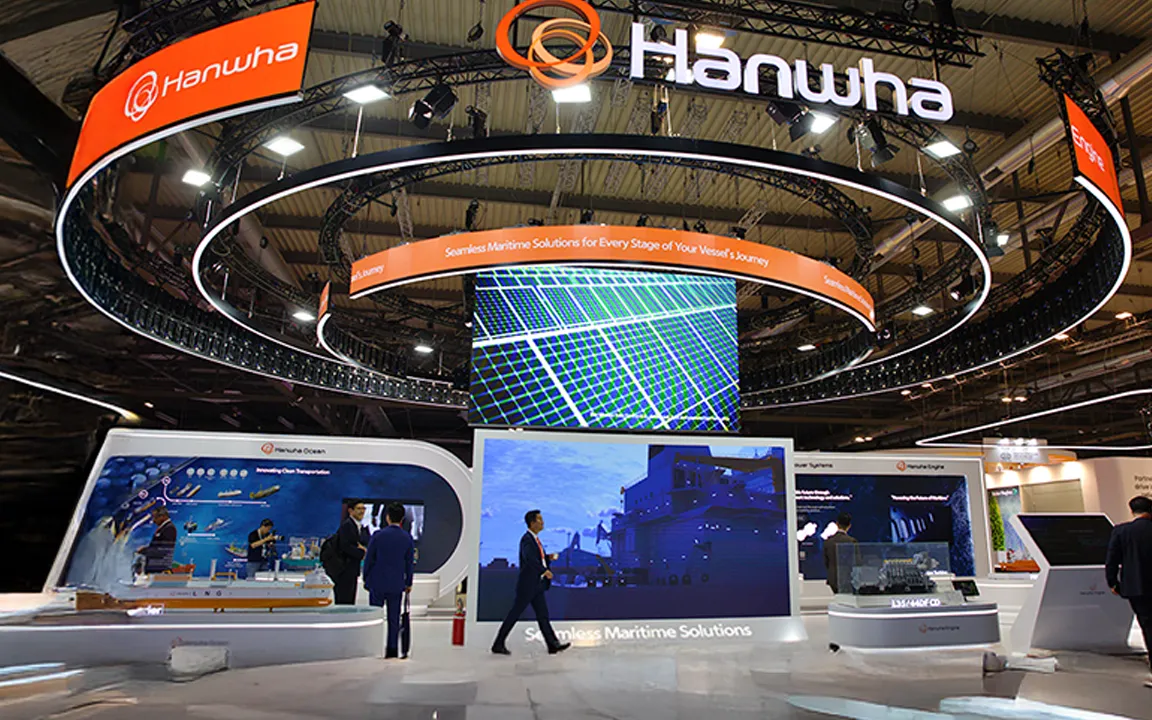
⦁ Gastech 2026 is a useful vantage point on that more connected system. Across LNG shipbuilding, floating facilities, alternative-fuel propulsion, marine energy storage, and AI-enabled energy management, Hanwha’s contribution to linking these areas is examined.
Global electricity demand is rising quickly. The International Energy Agency (IEA) expects it to grow 3.6% in 2026 and 3.8% in 2027, driven by factors including industry, electrification, and data centers. Meeting that demand reliably and affordably, while also reducing emissions, is becoming an increasingly complex challenge.
That challenge provides the backdrop to Gastech 2026, a major international energy industry gathering taking place in Bangkok. Its agenda spans natural gas and LNG, hydrogen, electrification, and digitalization, reflecting the range of approaches being considered across the industry.
Against that backdrop, we examine five questions shaping the energy-security conversation to understand where different technologies fit, how they can complement one another, and how Hanwha is responding across its energy and maritime businesses.
Why is energy security becoming a bigger part of the conversation?
Energy security is the uninterrupted availability of energy at an affordable price. In practice, it takes more than enough fuel or generating capacity. It also depends on being able to move, store, convert, and deliver energy where and when it is needed.
That is becoming harder to do. Electricity demand is growing while new generation, storage, and large loads face lengthy grid-connection queues. At the same time, power systems are integrating more variable solar and wind generation, while concentrated demand from data centers can be developed considerably faster than new grid infrastructure. International fuel markets add another source of risk, as geopolitical events and supply disruptions can affect fuel availability, trade flows, and prices. The IEA estimates that grid infrastructure can take five to 15 years to plan, permit, and complete, compared with one to three years for data centers.
These pressures have different causes and call for different responses. Rather than relying on a single fuel or technology, energy systems need different ways to generate, move, store, and manage energy, with each suited to different markets and applications.
What role will natural gas and LNG play as energy systems evolve?
Natural gas serves industrial demand and can provide dispatchable power when variable renewables are not producing enough electricity. LNG extends that reach by allowing gas to be transported by ship between markets that pipelines do not connect.
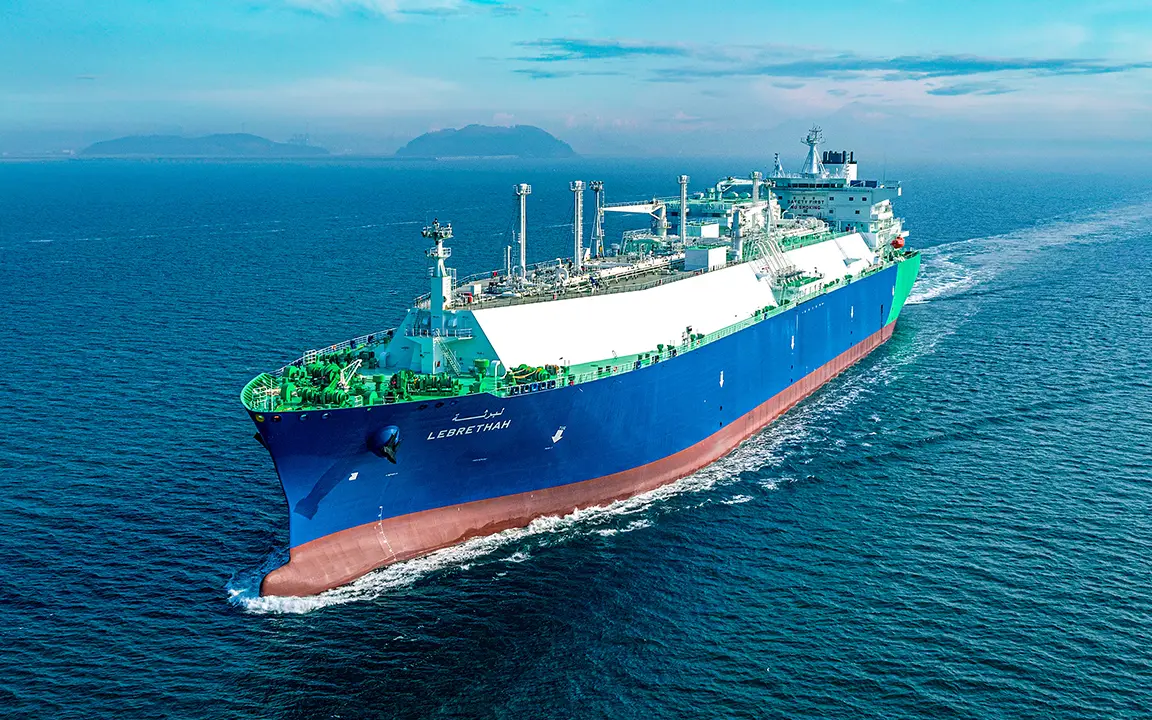
The IEA expects global LNG supply to rise by about 7% in 2026, its largest annual increase since 2019, as new projects come online in the U.S., Canada, and Qatar. Realizing the value of that additional supply depends on infrastructure spanning liquefaction, shipping, storage, and regasification. Hanwha Ocean has decades of experience in the maritime part of that chain. In February 2025, it became the first shipbuilder to deliver 200 LNG carriers. As of August 2026, Hanwha Ocean held 18.6% of the global LNG-carrier orderbook by vessel count, according to Clarksons Research.
Hanwha’s businesses operate across multiple stages of the LNG value chain, from production and transportation to procurement, regasification, and power generation. Upstream, Hanwha Ocean builds floating LNG (FLNG) platforms, and Hanwha is the largest shareholder in NextDecade, the developer of the Rio Grande LNG export terminal in Texas. Further downstream, Hanwha Energy procures LNG and operates gas-fired power plants, and Hanwha Ocean builds floating storage and regasification units (FSRUs) that convert LNG back into gas.
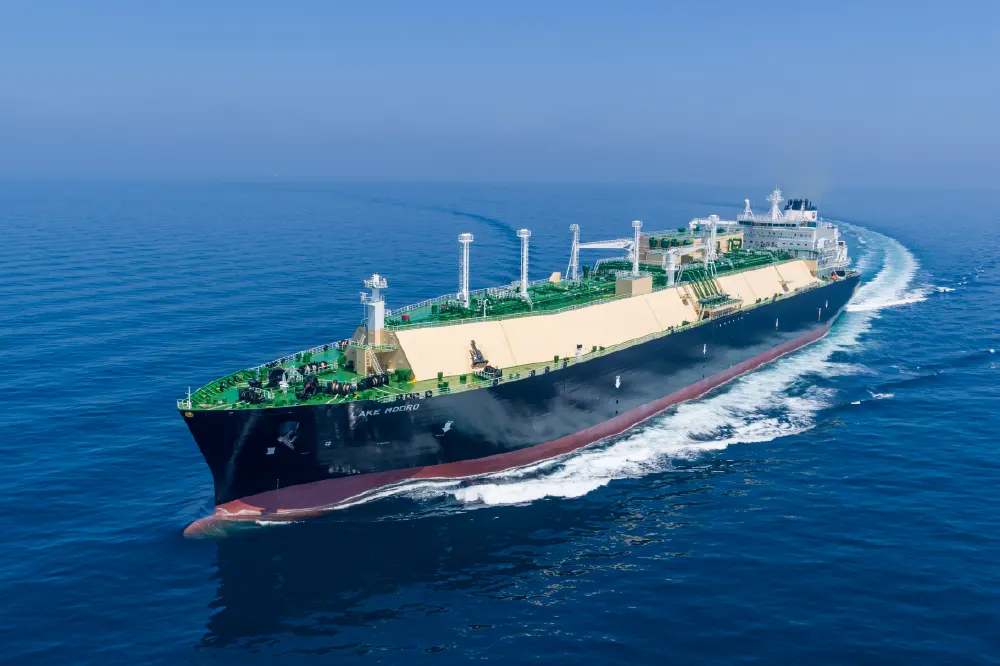
Lake Modro, LNG carrier built by Hanwha Ocean
Where do hydrogen and ammonia fit into the future energy mix?
Hydrogen and ammonia are being explored for sectors that are difficult to electrify directly, including heavy industry and long-distance shipping. Neither contains carbon, giving both the potential to reduce carbon dioxide emissions in certain applications, although their overall greenhouse-gas emissions depend on how they are produced and used. Ammonia can also serve as a hydrogen carrier, making it easier to transport over long distances than pure hydrogen.
Significant barriers remain. Both fuels require new production, storage, transport, and bunkering infrastructure, while cost, safety, fuel availability, and regulation will determine where they become commercially viable.
Hanwha is developing technology along both pathways. Hanwha Power holds an Approval in Principle (AiP) for an ammonia gas turbine retrofit design for an LNG carrier, while Hanwha Aerospace holds a DNV AiP for a maritime hydrogen fuel cell system. In October 2025, four Hanwha businesses also signed an agreement with HMM and Korean Register to develop and demonstrate a propulsion system combining an ammonia gas turbine with fuel cells for container ships.
Regulation remains another variable. The IMO’s proposed Net-Zero Framework would set marine fuel standards and greenhouse-gas pricing for international shipping, while the IMO’s broader ambition is to reach net-zero greenhouse-gas emissions from international shipping by or around 2050. The design approvals and demonstration projects taking shape now are steps toward making ammonia and hydrogen propulsion practical options for shipowners as the technology, infrastructure, economics, and regulatory landscape develop.
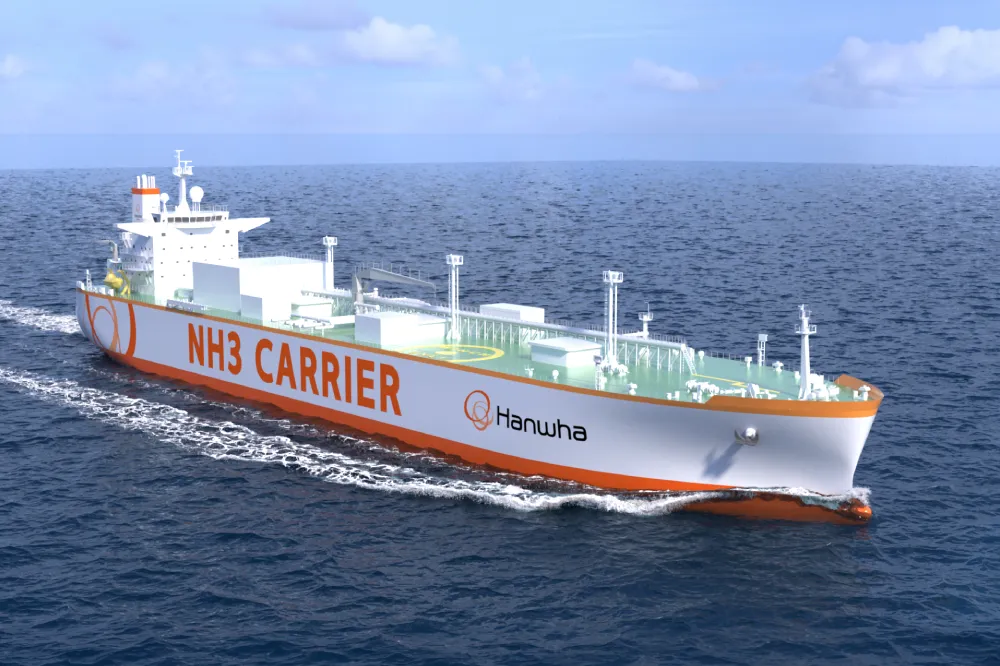
Render of ammonia carrier developed by Hanwha Ocean
How do hybrid systems, storage, and ports support maritime electrification?
Electrification can reduce fuel use and operational emissions from shipping, but its potential depends on vessel size, route, and operating pattern.
Fully electric propulsion suits vessels on short, predictable routes with regular opportunities to recharge. Large oceangoing ships require far more energy per voyage, making full battery-electric propulsion more difficult. Hybrid systems offer another option, pairing energy storage systems (ESS) with an engine to provide part of a vessel's propulsion or onboard power.
Electrification also depends on infrastructure ashore. Battery-electric ships need charging, while shore power lets vessels draw electricity from the grid while berthed. Both require sufficient port and grid capacity.
Hanwha is developing battery-hybrid propulsion across these different components. In April 2026, Hanwha Power, Hanwha Aerospace, and Hanwha Engine signed an agreement with classification society RINA to advance battery-hybrid propulsion for new and existing vessels. Hanwha Power leads system integration, Hanwha Aerospace contributes marine energy storage, and Hanwha Engine provides propulsion technology, bringing together the capabilities needed to develop battery-hybrid vessel systems.
Hanwha’s broader work in maritime electrification spans propulsion, energy storage, and port infrastructure. Its Norwegian subsidiary SEAM develops electric propulsion and power-automation systems, including retrofit solutions for existing vessels. Hanwha also builds immersion-cooled marine energy storage systems, certified by DNV and the American Bureau of Shipping (ABS), and is in discussions with European port authorities on energy storage and shoreside charging infrastructure.
How are AI, storage, and digital systems changing energy management?
As power systems incorporate more generation sources, batteries, and distributed energy resources, operators have more variables to coordinate while keeping supply and demand in balance.
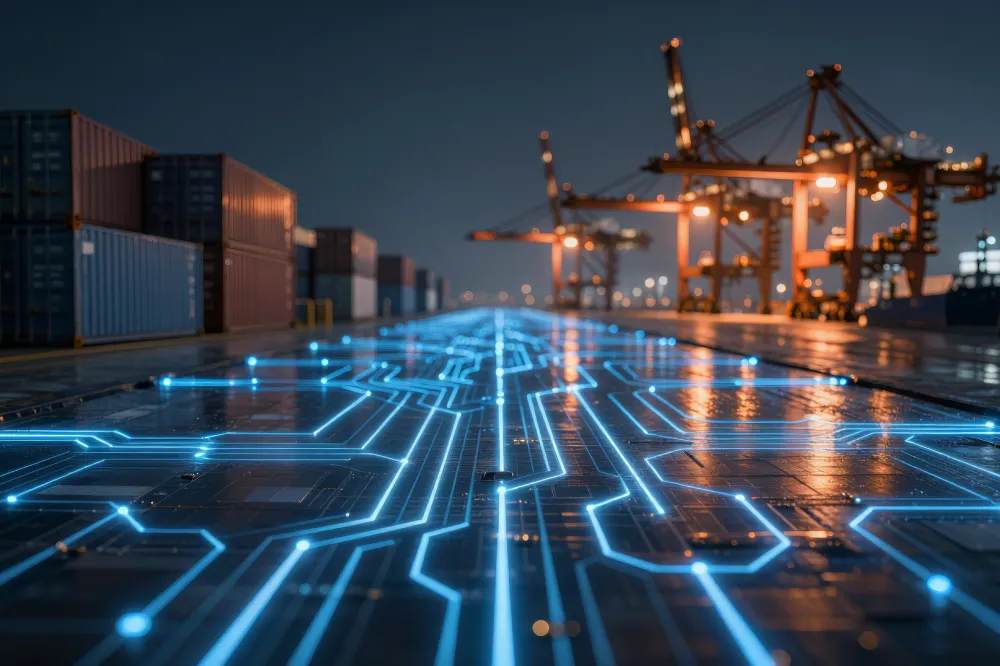
Energy storage can absorb energy when supply is plentiful and release it when demand is higher. AI-enabled energy management can help determine when to use that flexibility by analyzing generation, demand, storage levels, and grid conditions.
Hanwha is applying these capabilities to different energy-management needs. Its AI-enabled Energy Management System for data centers coordinates assets including batteries, generators, and turbines. Separately, the company offers distributed energy resource management capabilities that allow utilities to aggregate and dispatch portfolios of distributed assets.
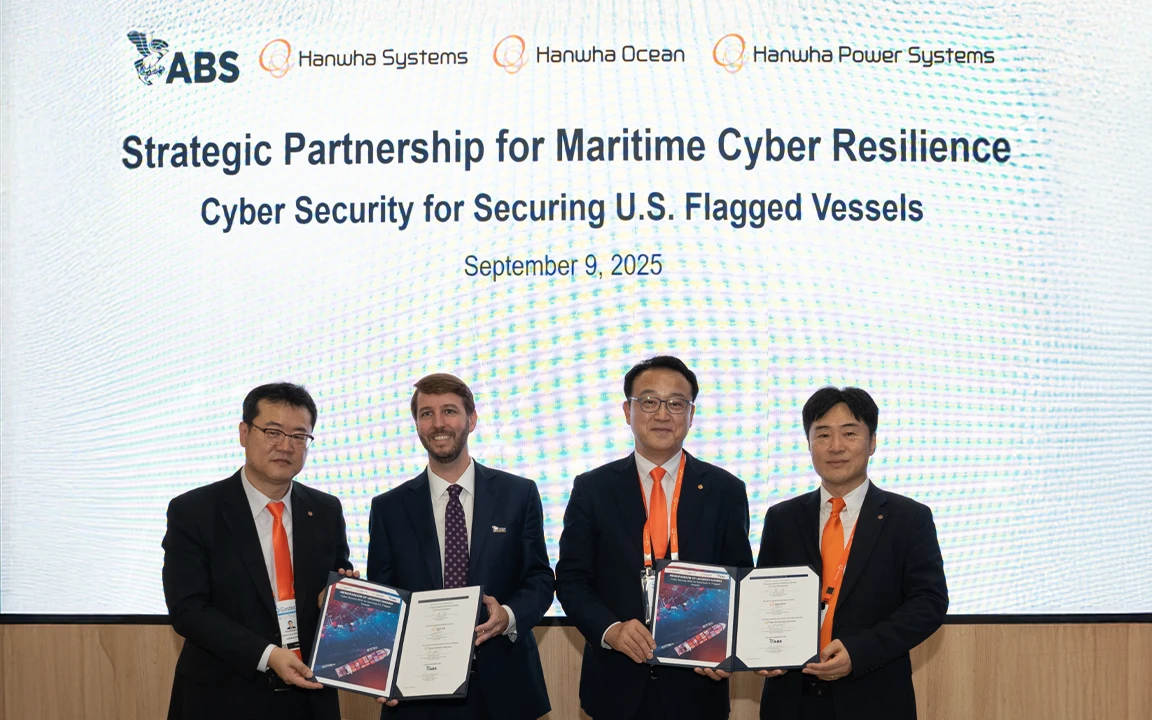
Greater connectivity also creates cybersecurity requirements. Hanwha Systems, Hanwha Ocean, and Hanwha Power are partnering with the American Bureau of Shipping on maritime cybersecurity requirements and vessel-specific measures including threat detection and incident response.
Developing new energy technologies is only part of the challenge. Their impact will depend on where they can be deployed effectively, the infrastructure needed to support them, and whether they can operate reliably and economically at scale.
Across Hanwha, the projects examined here apply different capabilities to specific energy and maritime needs – reflecting an energy landscape in which the right solution will depend on the market and application.
Related Content
Get the latest news about Hanwha, right in your inbox.
Fields marked with * are mandatory.
- Non-employee
- Employee