

Hanwha presents integrated LNG solutions at LNG 2026

• LNG is playing a strategic role in the energy transition, with growing emphasis on offshore production and lower-emission transportation solutions.
• Hanwha’s LNG portfolio spans floating production, storage and regasification infrastructure alongside advanced propulsion technologies, including ammonia gas turbines, dual-fuel engines and variable compression ratio systems.
• By integrating production, marine engineering and propulsion development, Hanwha is advancing coordinated LNG solutions that support efficiency, flexibility and emissions reduction across the value chain.
As the transition toward cleaner energy sources accelerates, liquefied natural gas (LNG) continues to play a critical role as a bridge fuel. While renewable energy capacity expands, LNG provides a stable and scalable alternative to traditional fuels, supporting energy security while lowering carbon emissions intensity. In many regions, LNG also helps balance intermittent renewable generation, reinforcing grid reliability and filling in gaps to help avoid power outages.
This dual role of supporting decarbonization while strengthening supply security is reshaping investment across the LNG value chain. Demand is expanding not only for liquefaction capacity, but also for solutions that support subsea gas field development and reduce emissions in LNG transportation.
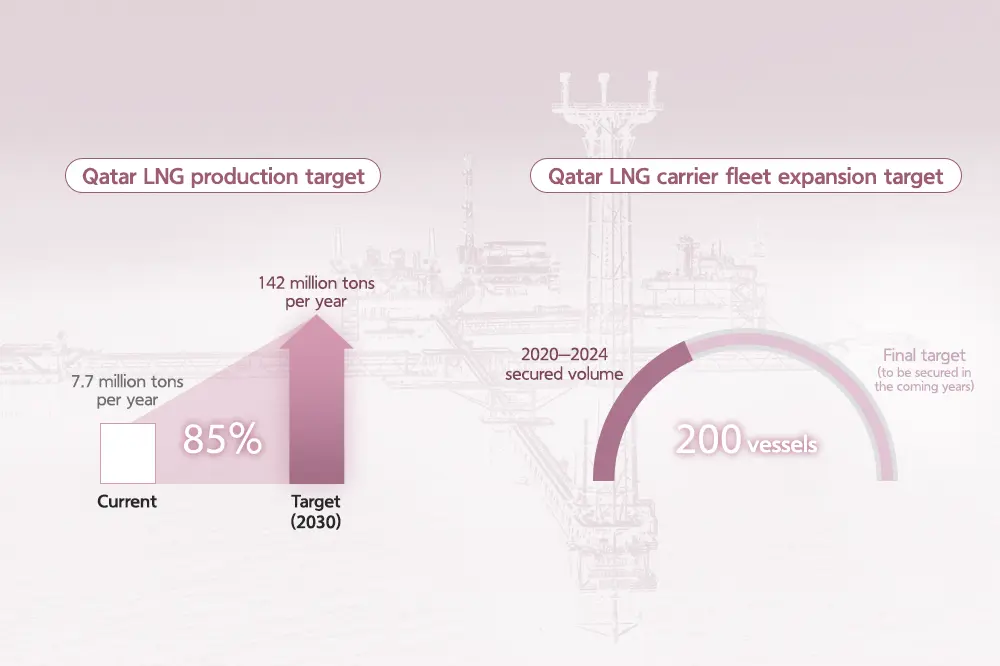
Earlier this month in Qatar, at LNG 2026 — the world’s leading LNG industry event — Hanwha Ocean, Hanwha Engine, and Hanwha Power Systems presented integrated LNG solutions spanning production, transportation, storage, and supply across the value chain. The event’s host country itself further illustrates the scale of today’s LNG expansion. As one of the world’s largest LNG exporters, Qatar is investing heavily in new liquefaction capacity to meet rising long-term demand — reflecting how major producers are reinforcing supply security amid global energy shifts.
Against this backdrop of expanding global capacity, Hanwha emphasized not individual products, but how coordinated solutions across production and shipping can improve efficiency. By coordinating engineering, shipbuilding, and propulsion development under a unified framework, Hanwha aims to reduce fragmentation across the LNG ecosystem and improve system-level performance.
Offshore production: Expanding LNG at sea
One area where this integrated approach is particularly evident is offshore production. Global LNG demand growth is driving expansion in upstream production and liquefaction capacity. As onshore development faces geographic, environmental, and permitting constraints, offshore gas fields are becoming increasingly important sources of supply.
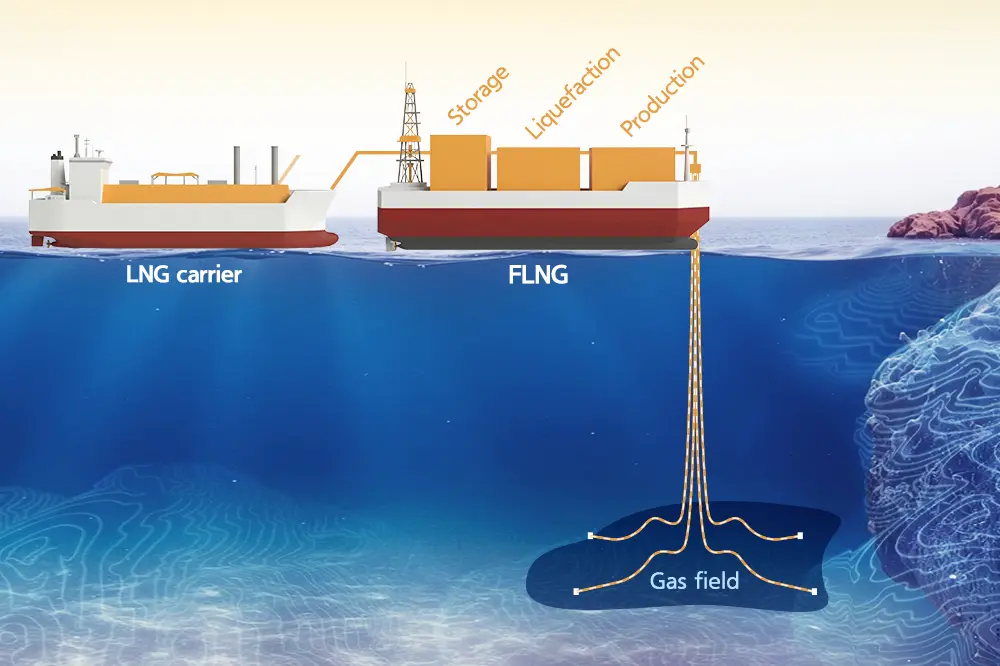
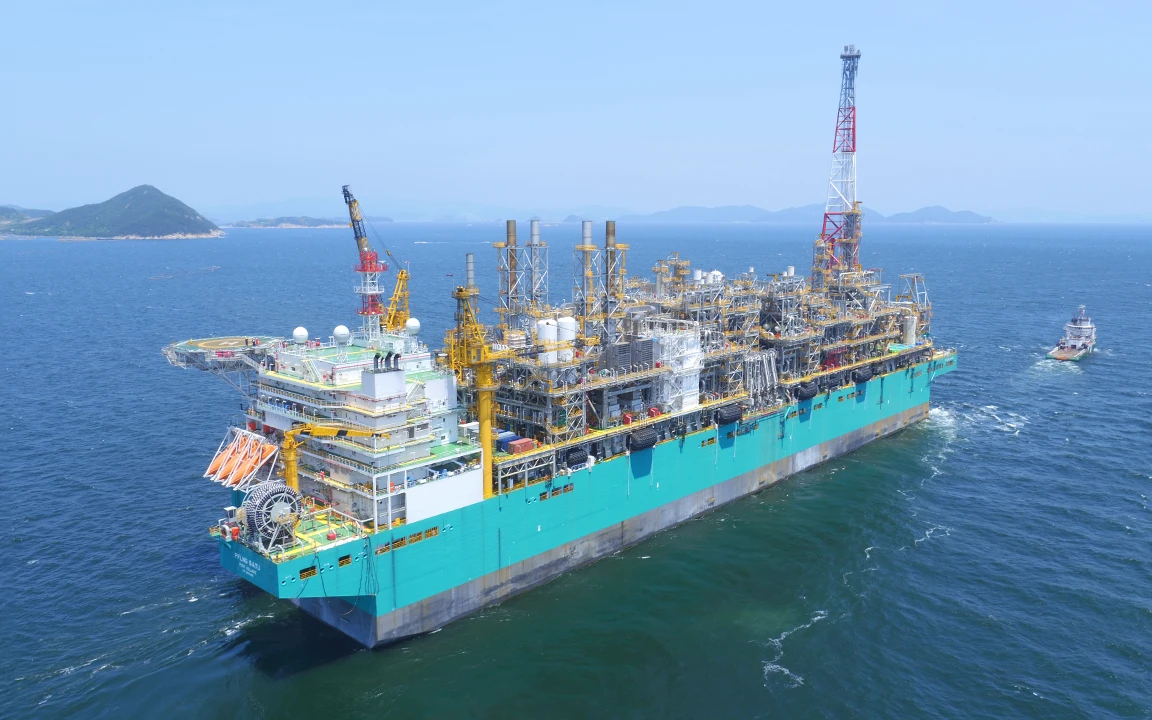
Floating liquefied natural gas (FLNG) technology enables the extraction, liquefaction, storage, and offloading of natural gas directly at sea. By processing gas at the source, FLNG reduces the need for extensive onshore infrastructure and can accelerate project timelines, particularly in remote or deepwater environments.
Hanwha Ocean entered this segment with the delivery of its first FLNG platform in 2016. Roughly the size of three soccer fields, the facility is capable of producing approximately 1.2 million tons of LNG per year. Since then, the company has expanded its offshore engineering and shipbuilding capabilities to support a broader range of floating solutions, including floating storage and regasification units (FSRUs) and regasification vessels.
By combining offshore plant engineering with marine construction expertise, Hanwha supports LNG development from field production to floating storage and transfer. This integrated approach enables operators to align design, fabrication, and operational planning from the outset, reducing complexity across the project lifecycle.
Decarbonizing LNG transportation
While LNG is a transitional energy source, the shipping sector faces growing pressure to reduce emissions further. For LNG carriers and gas-powered vessels, improving fuel efficiency and lowering methane slip are central challenges.
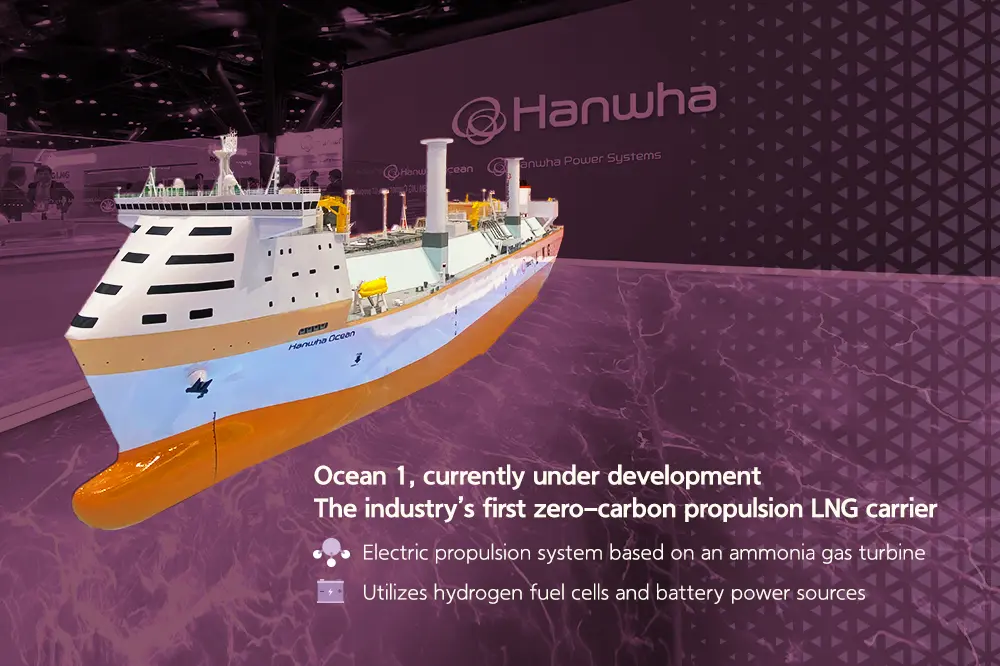
Hanwha is advancing multiple technologies to address these issues. One of the most significant is the development of an ammonia gas turbine, led by Hanwha Power Systems, capable of operating on 100% ammonia fuel. Unlike conventional systems that rely on pilot oil for ignition, the turbine uses ammonia combustion, supporting carbon-free propulsion. The system is being developed in conjunction with hydrogen fuel cell and electric propulsion technologies, with a target completion timeline of 2028.
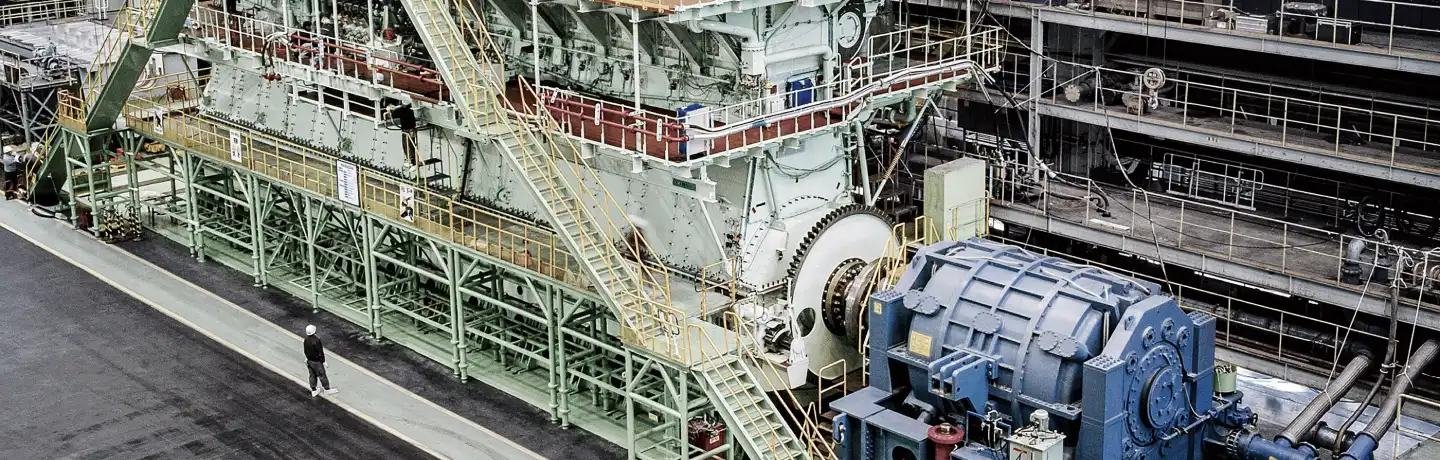
In parallel, Hanwha Engine continues to strengthen its position in dual-fuel (DF) engine technology. DF engines allow vessels to operate on both conventional marine fuels and LNG, providing flexibility as fuel regulations evolve. By optimizing combustion control and engine performance, Hanwha aims to improve efficiency while reducing methane emissions.
Another focus area is variable compression ratio (VCR) technology, which adjusts engine compression dynamically to improve fuel efficiency under varying operating conditions. By optimizing combustion performance, VCR systems can reduce fuel consumption and cut methane slip by up to 50% compared to conventional configurations.
Together, these technologies reflect a broader strategy: improving the environmental performance of LNG carriers while maintaining operational reliability and flexibility.
Integration across the LNG value chain
Production facilities, floating infrastructure, and propulsion systems are often developed within separate industrial domains. At LNG 2026, Hanwha emphasized the importance of integrating these elements across the LNG value chain. Hanwha’s strategy centers on aligning engineering, manufacturing, and system integration capabilities. This coordination supports efficiency not only during construction but also throughout long-term operation.
Integration also extends to lifecycle management. By linking propulsion systems, onboard energy technologies and digital monitoring tools from the design stage, operators gain improved visibility into system performance and maintenance needs. This approach supports greater availability and long-term asset optimization.
As the LNG market evolves under the combined pressures of decarbonization and energy security, solutions that balance supply stability with emissions reduction are becoming increasingly important. Hanwha’s integrated LNG portfolio reflects this transition, connecting offshore production with lower-emission propulsion technologies to support a more resilient and sustainable global energy system.
Related Content
Get the latest news about Hanwha, right in your inbox.
Fields marked with * are mandatory.
- Non-employee
- Employee