

What’s in a number: 5 insights from the IEA’s World Energy Investment 2026 report
Global energy systems are entering a new era. As energy demand continues to evolve, record levels of capital are being directed toward building more resilient, secure and diversified energy systems. From expanding electricity grids to supporting the rapid growth of A.I. and data centers, governments and businesses are reshaping investment priorities across the global energy sector.
According to the International Energy Agency's (IEA) World Energy Investment 2026 report, global energy investment is being driven by energy security concerns, geopolitical uncertainty, technological innovation and changing demand. Electricity systems, A.I. growth and grid expansion are changing where capital is allocated. As companies such as Hanwha continue investing across the energy value chain, they are helping build the foundation needed to support this next chapter in the global energy system.
Here are five figures that reveal where global energy investment is heading — and what they tell us about the forces shaping tomorrow's energy system.
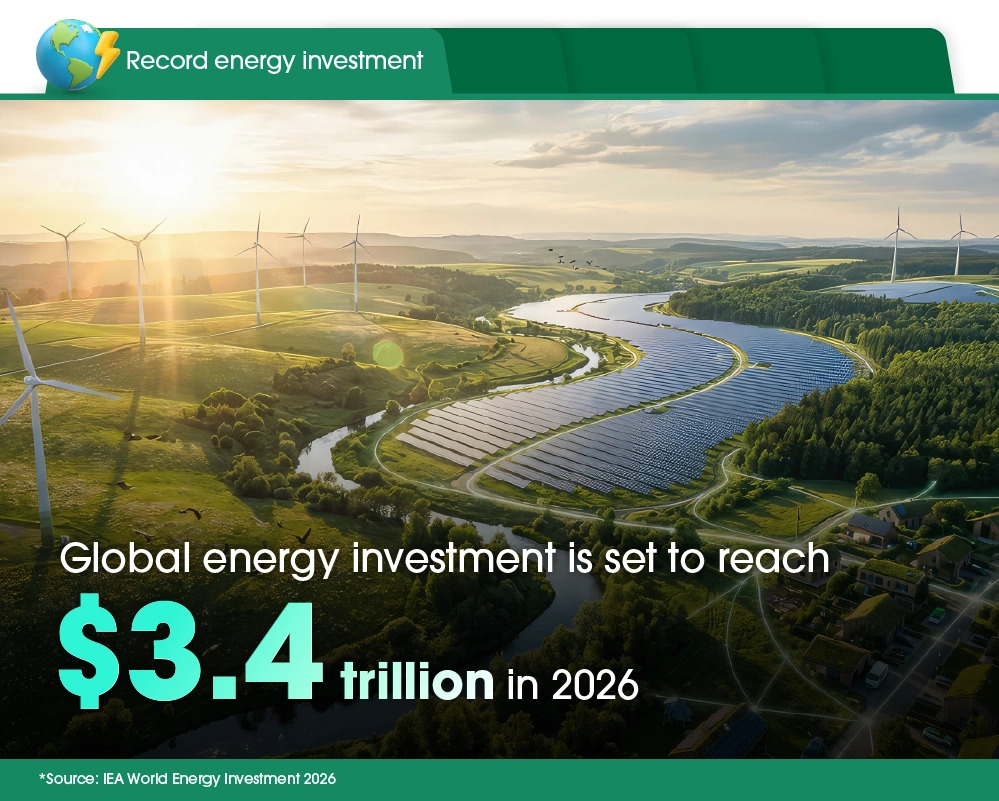
Projected to reach $3.4 trillion in 2026, global energy investment is entering a new phase. The record total reflects the scale of capital being directed toward strengthening energy systems, improving resilience, and meeting future energy needs.
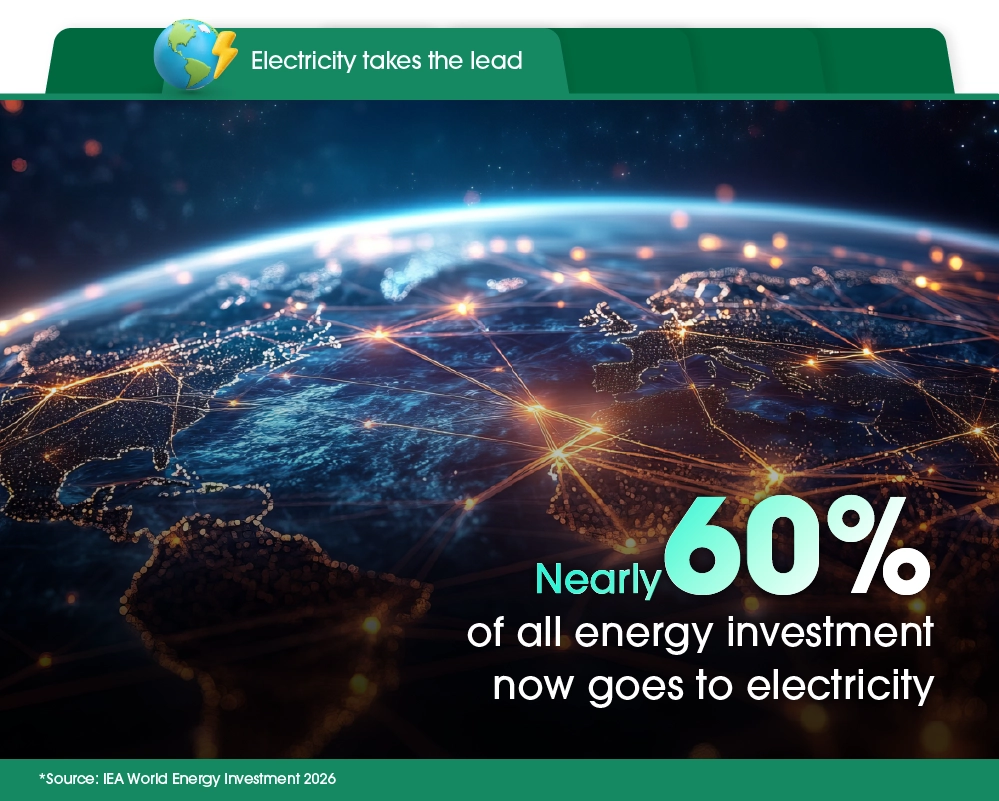
Electricity now accounts for nearly 60% of global energy investment. Spending is increasingly flowing toward power generation, grids, storage, and end-use electrification, highlighting electricity’s growing role within the broader global investment landscape.
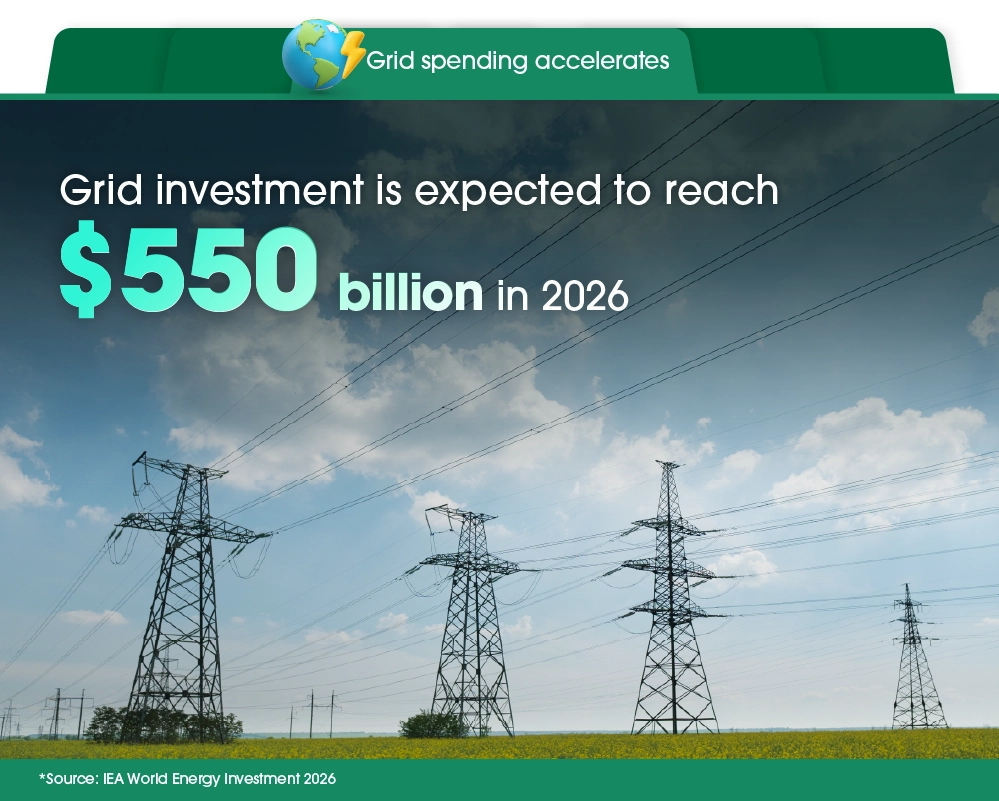
Meeting growing electricity demand requires significant investment in new and upgraded grid infrastructure. The IEA identifies grid investment as an urgent priority, with spending set to reach $550 billion in 2026. This growth is driven by supply chain pressures, as the cost of critical components, such as transformers and cables, continues to rise.
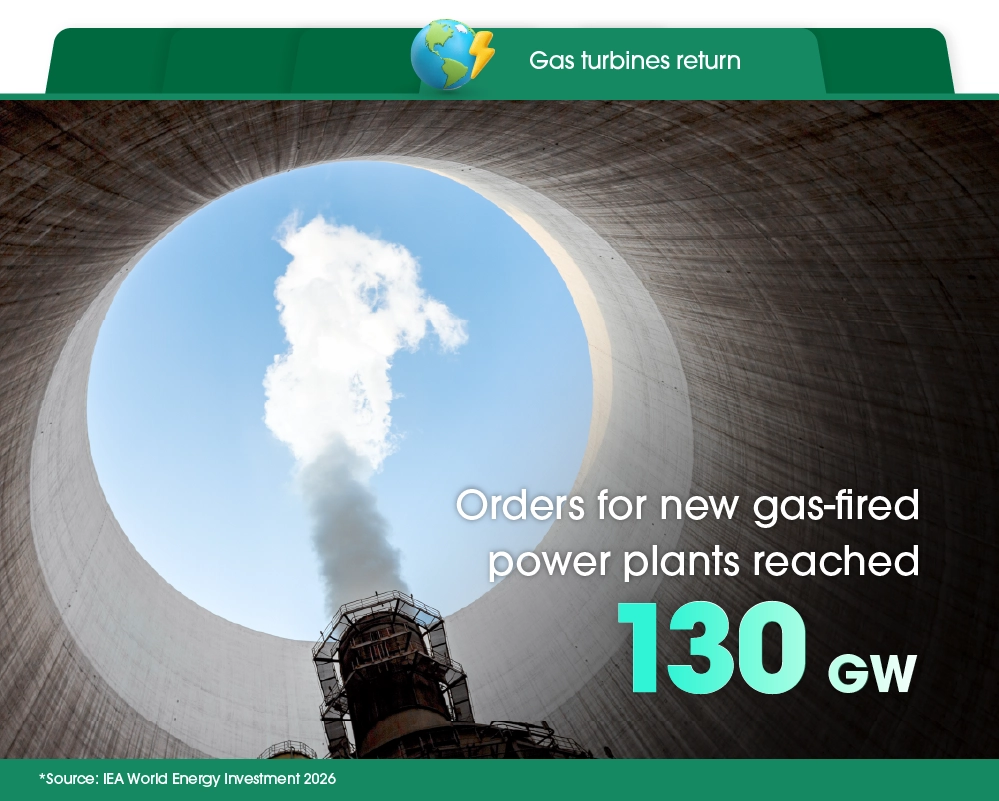
According to the IEA, this marks the highest level of gas turbine orders in 25 years. As A.I., data centers, and other sources of power needs continue to grow, countries are investing in dispatchable generation to support system reliability. The trend is particularly visible in the U.S., where rapid A.I.-driven power demand has revitalized the business case for natural gas generation.
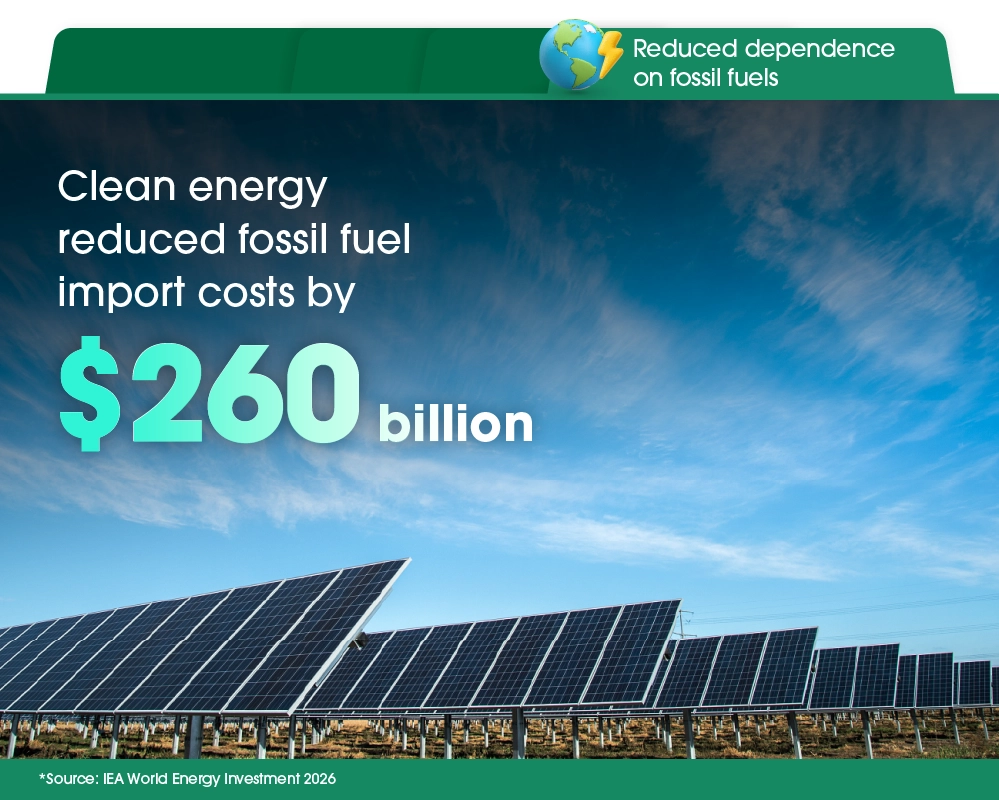
Clean energy is delivering more than emissions reductions. Investments in renewables, nuclear power, energy efficiency, and electrification are reducing dependence on imported fossil fuels, helping major importers like the EU, China, and India avoid $260 billion in 2025 alone. These savings strengthen long-term energy security by reducing exposure to volatile global fuel markets.
Related Content

Get the latest news about Hanwha, right in your inbox.
Fields marked with * are mandatory.
- Non-employee
- Employee